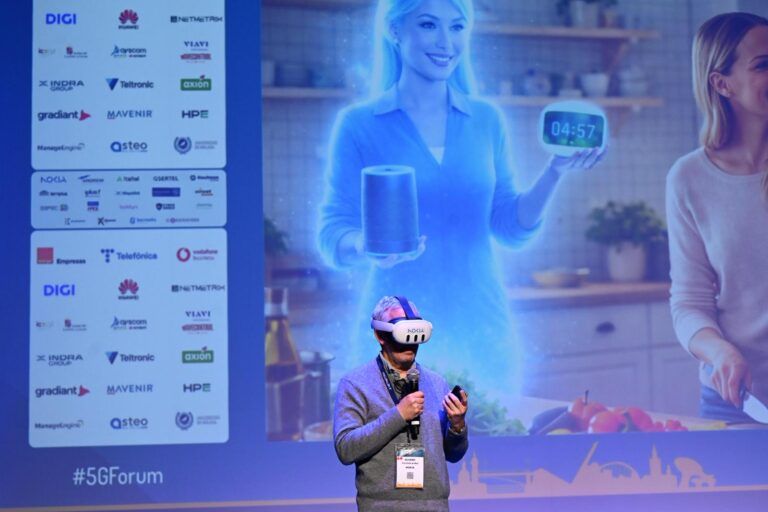
Smart networks, digital resilience, AI, cybersecurity and 6G shape the technological future at the 5G Forum
14/05/2026
- Experts, operators, universities and technology companies analysed the major challenges facing the digital ecosystem: from infrastructure resilience and cybercrime to the evolution towards smart networks, edge computing and future 6G technologies.
The event focused on the real impact of 5G on strategic sectors such as industry, healthcare, connected mobility, agriculture, smart cities and critical services, consolidating the 5G Forum as the leading platform for advanced connectivity applications in Spain.
The second day of the 9th edition of the 5G Forum, held at the Cartuja Auditorium —managed by Yventu— at Sevilla TechPark, brought together some of the leading experts, operators, universities and technology companies from the digital ecosystem to analyse the present and future of 5G, cybersecurity, artificial intelligence, private networks and the evolution towards 6G.
The event once again highlighted how advanced connectivity is becoming a critical infrastructure for sectors such as industry, healthcare, mobility, energy and public administration, in a context marked by the exponential growth of digital threats and the need to build increasingly resilient, intelligent and secure networks.
Cybersecurity and resilience: the great challenge of hyperconnectivity
One of the main themes of the conference was cybersecurity as it applies to the 5G ecosystem. Gabriel González, Deputy Prosecutor for Cybercrime at the Public Prosecutor’s Office, warned of the sharp rise in digital crime linked to technological progress. “The growth of cybercrime over the last ten years has been absolutely exponential, increasing more than fivefold,” he warned, further emphasising that “computer scams and fraud are now the third most common crime in terms of the number of cases and victims in Spain, behind only assault and gender-based violence”.
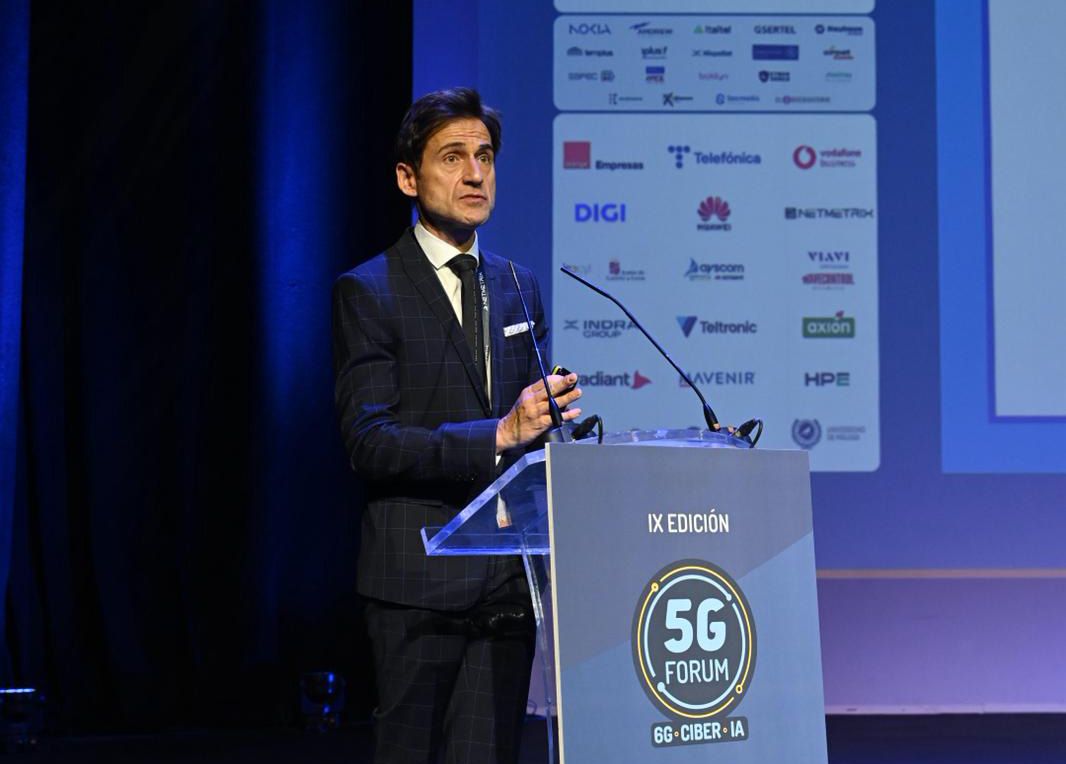
Gabriel González, Deputy Prosecutor for Cybercrime at the Public Prosecutor’s Office, during his participation in the 9th edition of the 5G Forum.
On the same topic, Antonio Sánchez-Maroto, Cybersecurity Business Development Manager at MasOrange, addressed the new risks associated with the hyper-connected industry and industrial 5G networks. “In 5G industrial environments, passwords are no longer a secret: they are a vulnerability,” he noted, whilst Roberto Lara, Head of the Cybersecurity Business Unit at Vodafone Business, highlighted how software-defined infrastructures are completely transforming the traditional security model. “The traditional perimeter is disappearing,” he stated, advocating for Zero Trust models and advanced segmentation to protect critical sectors such as industry, robotics and healthcare.
The resilience and validation of critical infrastructure were also the focus of the presentation by Joel Zaragoza, CTIO and Head of Services at Netmetrix, who emphasised that “no protection system is reliable until it has been tested under real-world conditions”. The expert also warned of the growing impact of quantum computing and the need to prepare 5G infrastructure now to address future cryptographic risks.
Meanwhile, Fernando de la Cruz, Wireless Chief Solution Architect at Huawei, and Isaías García, Senior Lecturer at the University of León, advocated for “shared responsibility” models to protect private 5G networks, noting that “security in 5G is not a static state, but an ongoing process”.
Private networks, connected mobility and critical communications
The second day also featured the presentation of CIBERMOV, the new urban laboratory for connected mobility and cybersecurity promoted by the Regional Government of Castile and León, Renault Group Spain and MasOrange. The project combines a private 5G network, edge computing, V2X technologies and advanced cybersecurity systems to validate connected driving solutions in real urban environments.
The strategic role of private 5G networks was also the focus of several presentations. Sergio García Fernández, Private 5G Presales Manager at Hewlett Packard Enterprise, argued that the true potential of private 5G lies in environments requiring “low latency, advanced mobility and guaranteed quality of service”, such as ports, airports, logistics and defence.
For her part, Cecilia Jordán, Business Development Manager at Teltronic, highlighted the role of mission-critical communications in sectors such as emergency services, mining and energy. “When a communication can affect people’s safety, availability and reliability are no longer optional,” she stated.
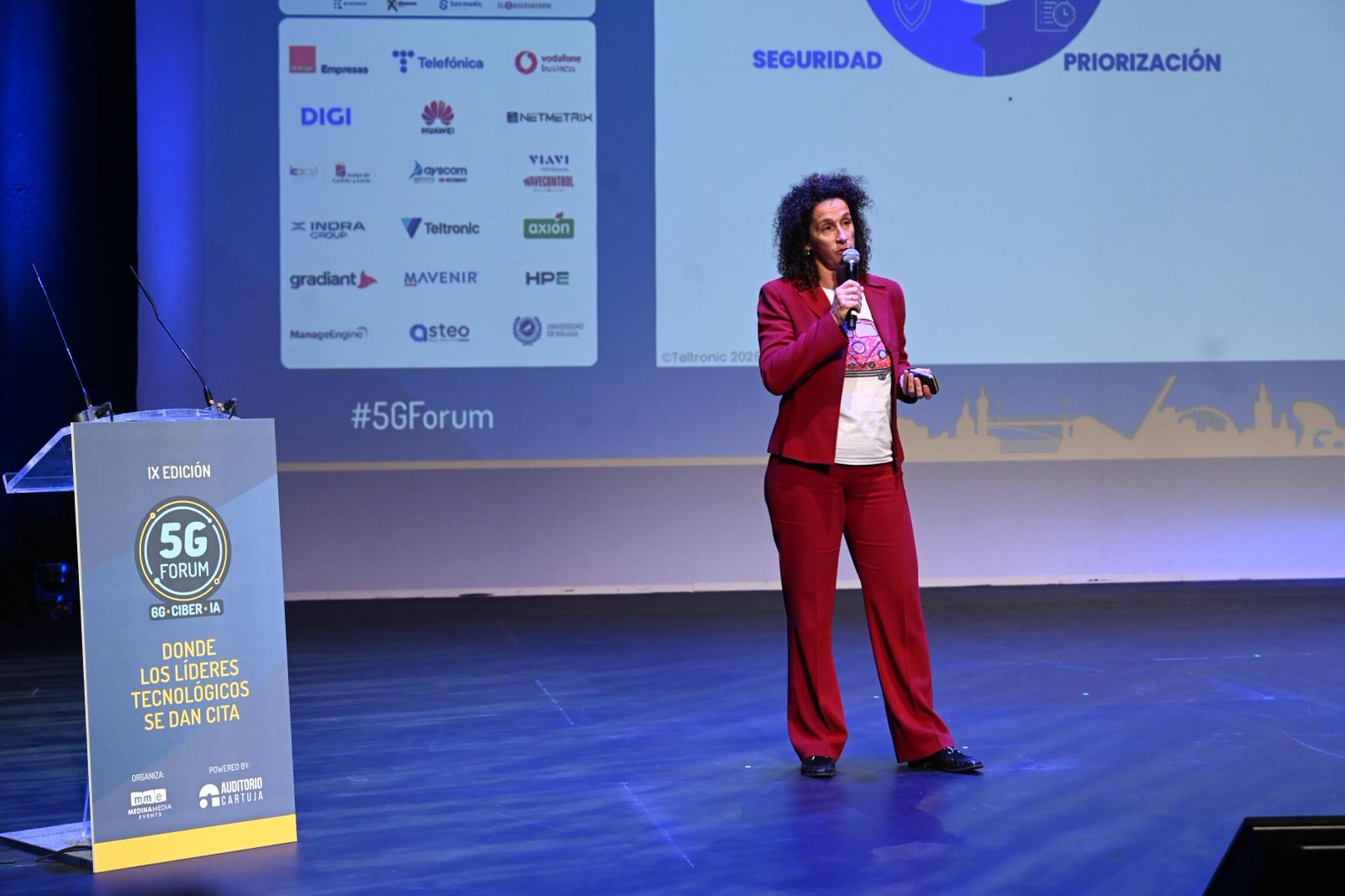
Cecilia Jordán, Business Development Manager at Teltronic, during her participation in the 9th edition of the 5G Forum.
Artificial intelligence, edge computing and smart networks
The convergence of AI, edge computing and smart networks dominated much of the day’s proceedings. David Donaire, Communication & Edge DC Director at Templus, highlighted the strategic role of Edge Data Centres in supporting the new AI-driven digital economy. “Inference is the moment when 5G and the Edge truly come into their own,” he explained, advocating for low-latency distributed processing models.
In the same vein, Joan Vives Sánchez, Technical Consultant for Iberia at ManageEngine, argued that “information technology is no longer merely a business enabler, but the very core of the business”, advocating for unified observability platforms capable of anticipating incidents through artificial intelligence and machine learning.
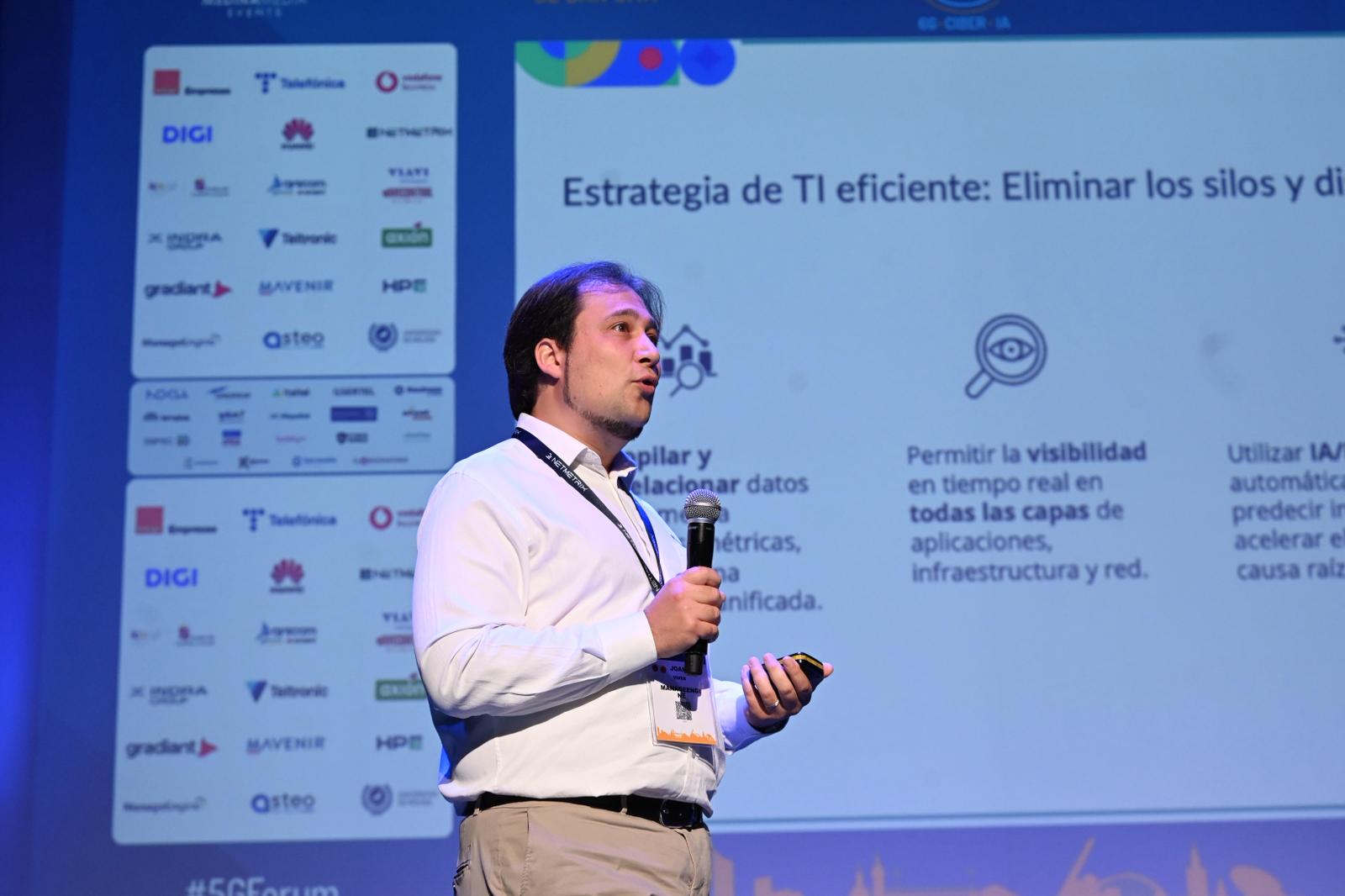
Joan Vives Sánchez, Technical Consultant Iberia at ManageEngine, during his participation in the 9th edition of the 5G Forum.
Artificial intelligence applied to immersive experiences and smart networks was also the focus of the presentation by Álvaro Villegas, Director of Nokia’s eXtended Reality Lab, who summed up this new technological era with a key idea: “Networks serve to connect intelligences”.
For his part, Francisco Jaén Cubero, Corporate Director of Operations and R&D&I at Ximenez Group, demonstrated how 5G and AI are transforming cities and smart urban experiences. “Lighting is no longer simply installed: it is orchestrated,” he stated, explaining how sensorisation and data analysis enable urban spaces to be transformed into connected environments that can be monitored in real time.
6G, technological sovereignty and applied research
Future 6G technologies also played a prominent role during the conference. José Joaquín Escudero, Head of Advanced Mobile Communications at Gradiant, presented advances in deep tech, artificial intelligence, integrated sensing, photonics and quantum technologies, arguing for the need to strengthen “national and European technological sovereignty”.
Speaking on behalf of the Polytechnic University of Valencia, Narcís Cardona emphasised that the challenge is no longer solely about research, but about turning knowledge into industrial leadership. “It is not enough to compete with one another; we need to build joint capabilities,” he argued.
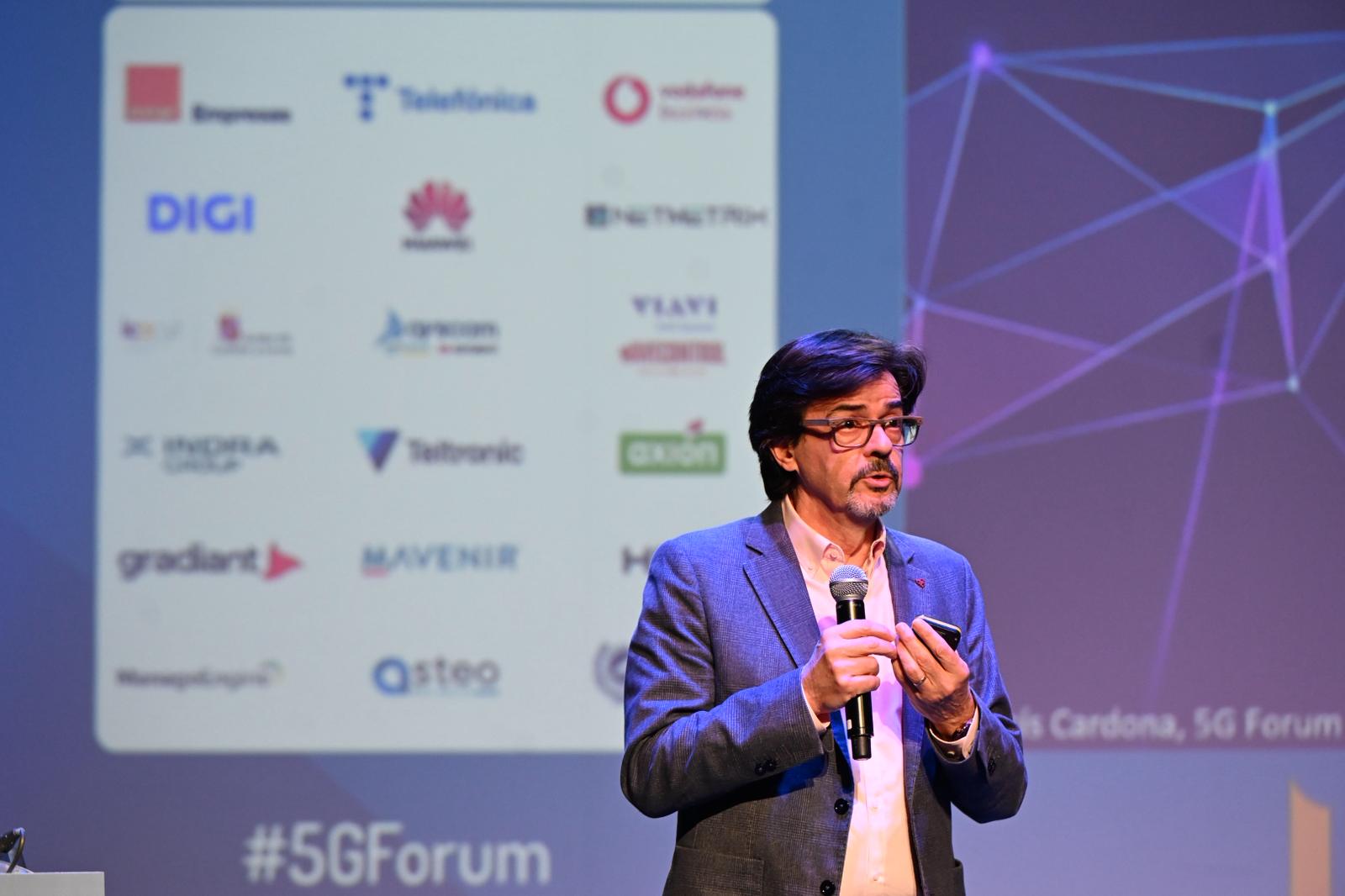
Narcís Cardona, Director of the 6G Joint Innovation Centre and Vice-President of the One6G Association, during his participation in the 9th edition of the 5G Forum.
Along the same lines, José Ignacio Alonso Montes, professor at the Polytechnic University of Madrid, presented the “6G Madrid” ecosystem, which integrates advanced laboratories, Open RAN, MEC, digital twins and private networks to accelerate the development of future mobile technologies.
The international dimension of the 5G ecosystem was addressed by Georgia Jordan, Research Analyst at S&P Global, who highlighted that “Spain is one of the few countries in the world where all the major operators already offer commercial 5G Standalone”. The analyst also pointed out that the major challenge today lies in “monetising 5G with services that generate real value”.
Health, agriculture and real-world applications of 5G
The practical application of 5G in strategic sectors also featured prominently. Javier Rivas, an expert in mobile communications at the University of Málaga, presented European projects that combine 5G, drones, IoT and artificial intelligence to optimise irrigation and agricultural sustainability. “Research must be transferred to society and generate a real impact,” he emphasised.
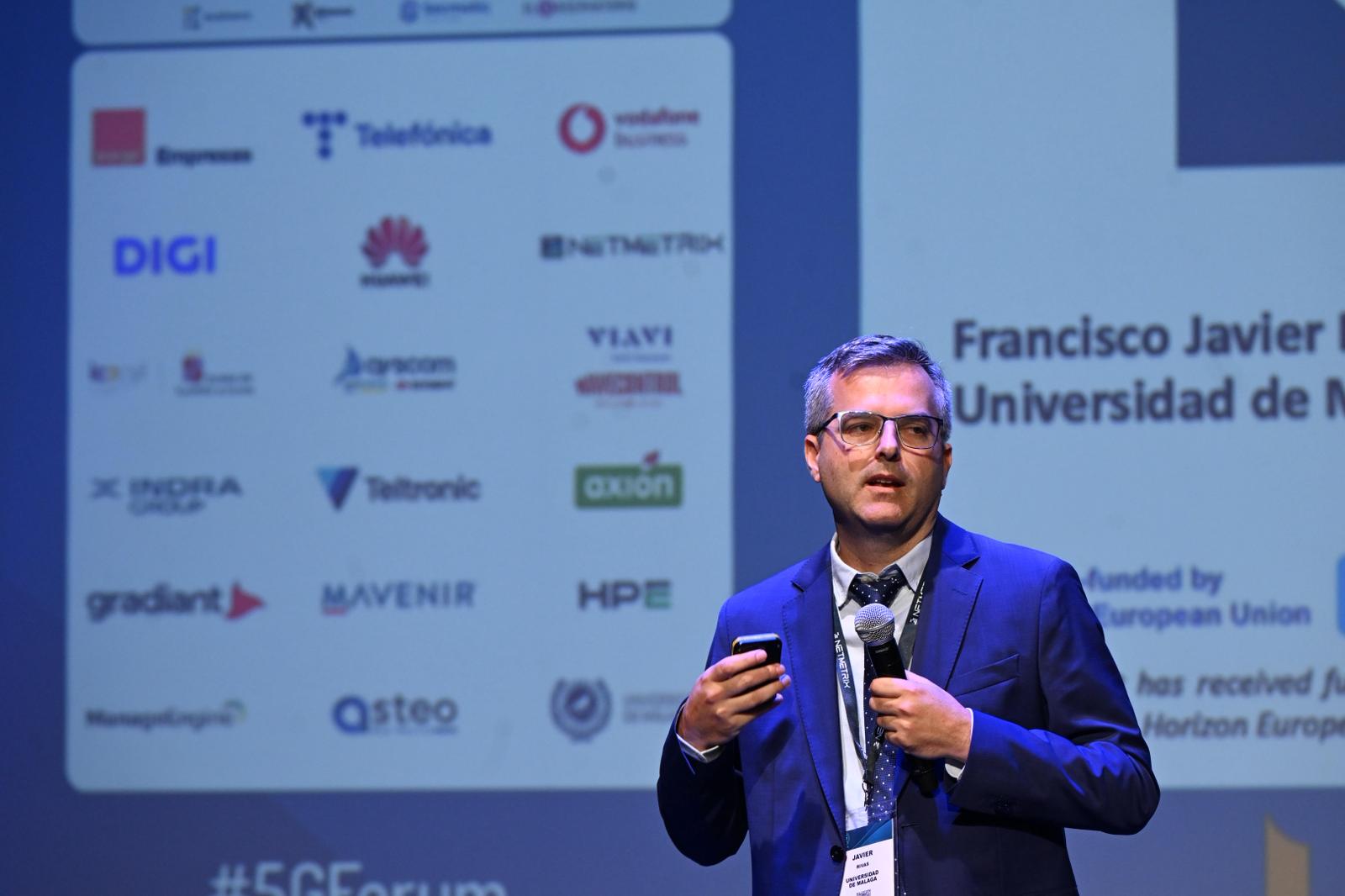
Javier Rivas, an expert in mobile communications at the University of Málaga, during his participation in the 9th edition of the 5G Forum.
The impact of future 6G networks on the healthcare sector was addressed by Carles Antón-Haro, representative of CTTC and the European SNS initiative, who showcased real-world examples of remote surgery, connected rehabilitation, smart ambulances and advanced patient monitoring. “6G technologies are not just a vision of the future, but technically viable and clinically useful solutions,” he stated.
For his part, Javier Sedano, Managing Director of the ITCL Technology Centre, highlighted the need to translate 5G into real and sustainable business solutions. “We must not seek global solutions, but rather solve specific problems,” he argued, emphasising the importance of bringing private 5G networks closer to the reality of SMEs.
Infrastructure, resilience and the future of telecommunications
The conference concluded with several panel discussions focusing on the strategic role of digital infrastructure and the resilience of telecommunications. During the debate moderated by Carmen Ortiz Pedraza, Director of the Conecta Digital Forum at DigitalES, participants agreed with that “the traditional model of one operator, one tower is no longer sustainable”, advocating for infrastructure-sharing models to accelerate roll-outs and reduce the digital divide.
Similarly, at the roundtable moderated by Manuel Ortigosa Brun, Dean of COITAOC, lessons learnt following critical events such as the 2025 power cut or the DANA were analysed. The experts agreed that “resilience is no longer an option, but a structural requirement”, calling for greater public-private coordination to ensure the continuity of critical communications in extreme scenarios.
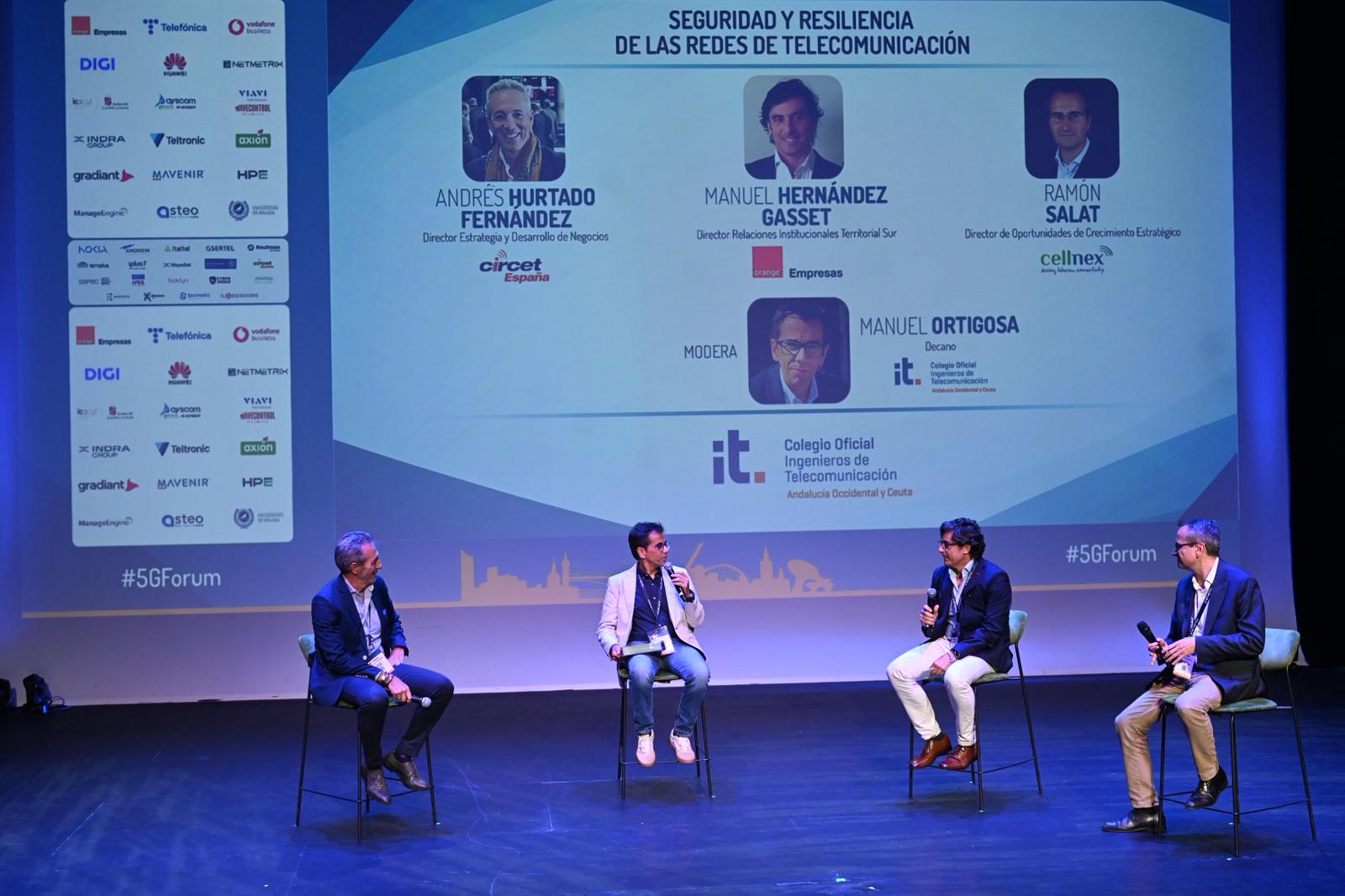
Panel on ‘Security and Resilience of Telecommunications Networks’, moderated by Manuel Ortigosa Brun, Dean of COITAOC, during the 9th edition of the 5G Forum.
With this intense second day, the 5G Forum once again established itself as the leading event in Spain for analysing the real-world applications of 5G, cybersecurity, artificial intelligence and the future smart networks that will shape the coming digital decade.
All the conferences from the 5G Forum will be available to view on demand via The Observatory, the digital platform of Medina Media Events, where each conference will be available 24 hours a day, 365 days a year, free of charge.
The ninth edition of the 5G Forum is organised by Medina Media Events and is supported by Orange Empresas, Telefónica, Vodafone, DIGI, Huawei, Netmetrix, the Regional Government of Castile and León, Ayscom, Wavecontrol/Viavi Solutions, Minsait by Indra Group, Teltronic, Axión, Gradiant, Mavenir, HPE, Manage Engine, Asteo Red Neutra, the University of Málaga, Nokia, Andrew, Italtel, Gsertel, Neutroon, Templus, IplusF, Hispasat, Rohde & Schwarz, Circet, Sapec, Digital Innovation Hub Industry 4.0 / ITCL, Boldyn, Ethon Shield, Anritsu, Evolvers, Grupo Ximenez and Secmotic.