
“Cybersecurity is no longer just an insurance policy; it has become a licence to operate”
12/05/2026
- Vodafone, Telefónica and Orange take centre stage at the launch of the Seville 5G Forum, highlighting the strategic role of Stand-Alone 5G, artificial intelligence and advanced networks in digital transformation.
The leading telecoms operators with a presence in Spain –Orange, Telefónica and Vodafone– took centre stage on Tuesday at the launch of the 9th edition of the Seville 5G Forum, where they agreed that the future of connectivity lies in the combination of 5G Standalone, artificial intelligence, edge computing, cybersecurity and smart networks to transform strategic sectors such as industry, public administration, healthcare and critical infrastructure.
The opening session of the event featured Teresa Llamas, Director of Public Administration at Vodafone Spain; María Jesús Almazor, Chief Revenue Officer at Telefónica Tech; and Mónica Sala, Chief Network Officer at MasOrange, who shared their respective companies’ views on the evolution of the digital ecosystem and new technological challenges.
During her speech, María Jesús Almazor stated that the technology sector has entered a new phase in which “we have moved from talking about coverage, deployment, speed or latency to talking about the value we build on that technological infrastructure”, arguing that “technology, on its own, is meaningless if it does not generate a real impact on businesses, institutions and society”.
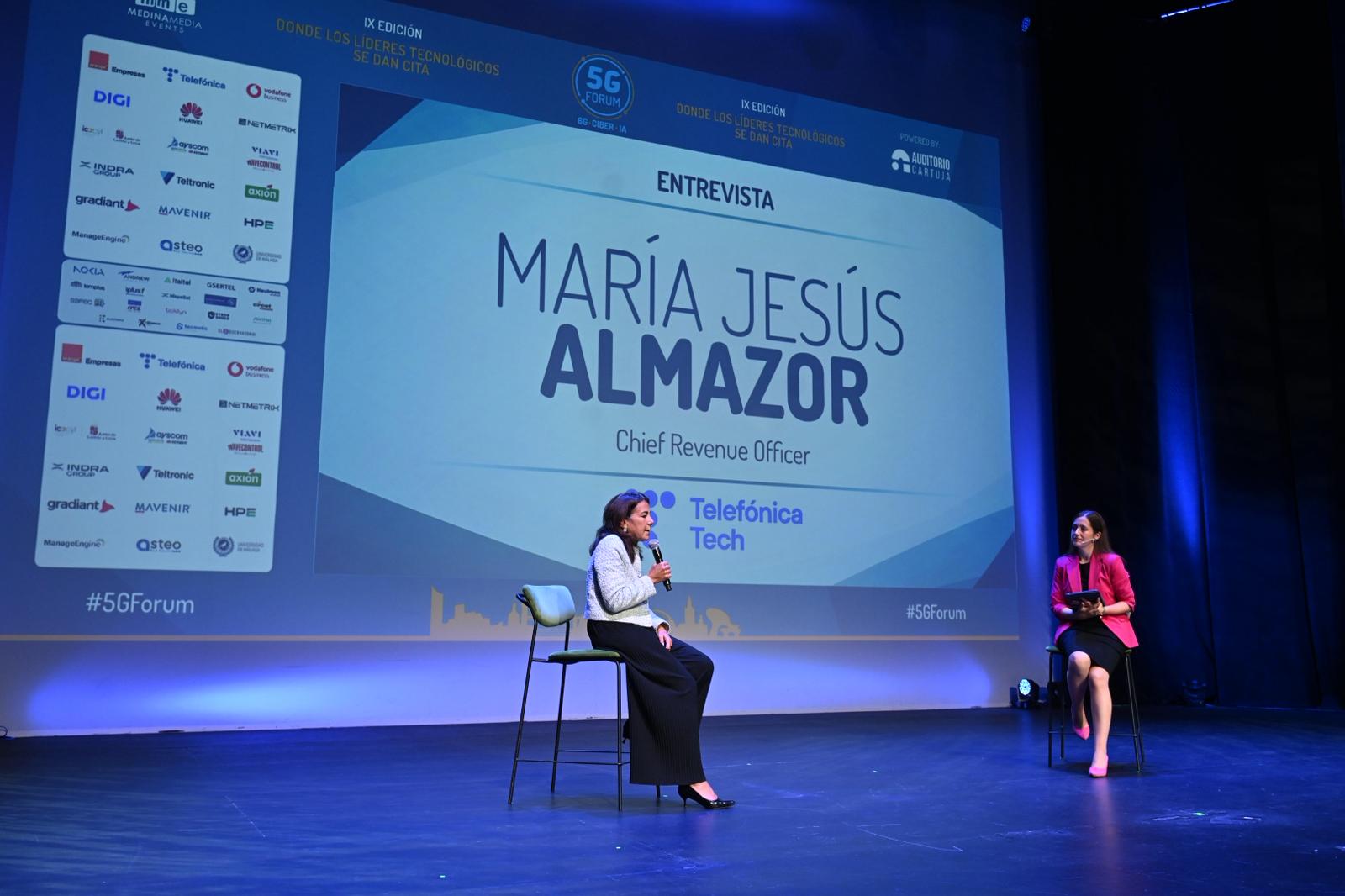
María Jesús Almazor, Chief Revenue Officer at Telefónica Tech.
The Telefónica executive also highlighted the exponential growth of digital threats and delivered one of the day’s most forceful messages by warning that “today, cyberattacks are already being carried out automatically by machines” and that “cybersecurity is no longer an insurance policy but has become a licence to operate”.
In this context, she argued for the need to automate part of the response to threats using artificial intelligence and called for the acceleration of technology adoption in companies and institutions: “If you haven’t started yet, start now.”
Speaking on behalf of Vodafone Spain, Teresa Llamas highlighted the strategic role that advanced networks currently play in the digital economy, stating that “connectivity is no longer a commodity; it has truly become absolutely critical”.
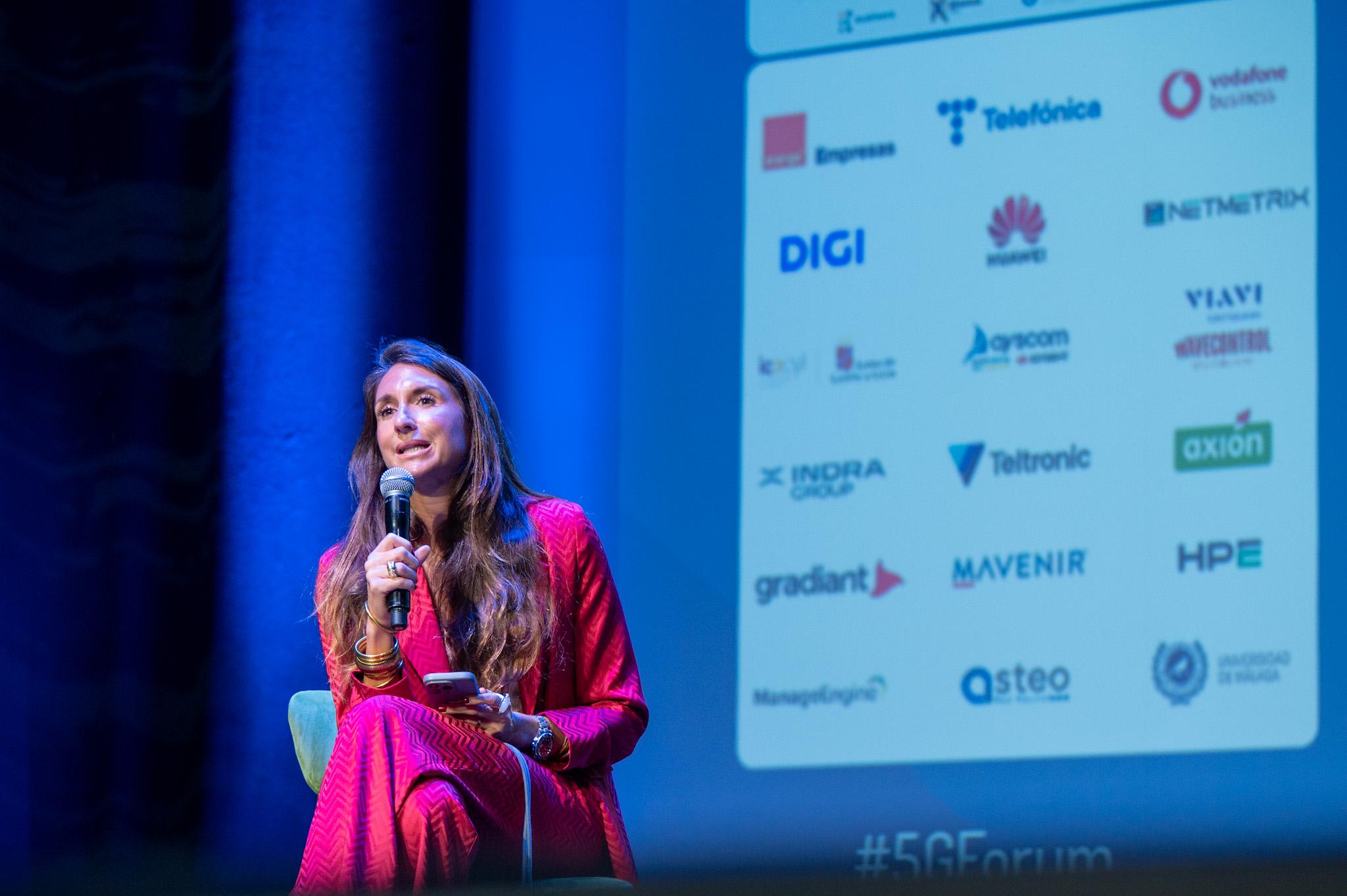
Teresa Llamas, Director of Public Administration at Vodafone Spain.
The executive also highlighted Vodafone’s commitment to areas such as cybersecurity, the IoT and artificial intelligence, technologies on which the operator is already developing real-world projects for businesses and public administrations, ranging from AI agents for SMEs to intelligent fire detection or cyber-threat detection systems.
Llamas also emphasised the unique value that operators offer compared to hyperscalers, thanks to factors such as data sovereignty, low latency and the ability to provide comprehensive services, whilst also warning that “if networks are not secure, we cannot trust them”.
He also reaffirmed Vodafone’s strategic commitment to Standalone 5G, a technology that will enable the deployment of private networks and critical services in sectors such as industry, emergency services and healthcare.
For her part, Mónica Sala, Chief Network Officer at MasOrange, argued during the forum that “5G Standalone and 5G Advanced are already a reality and can tangibly transform the processes and services of businesses and public administrations”, highlighting the operator’s role as one of the main drivers of advanced connectivity in Spain.
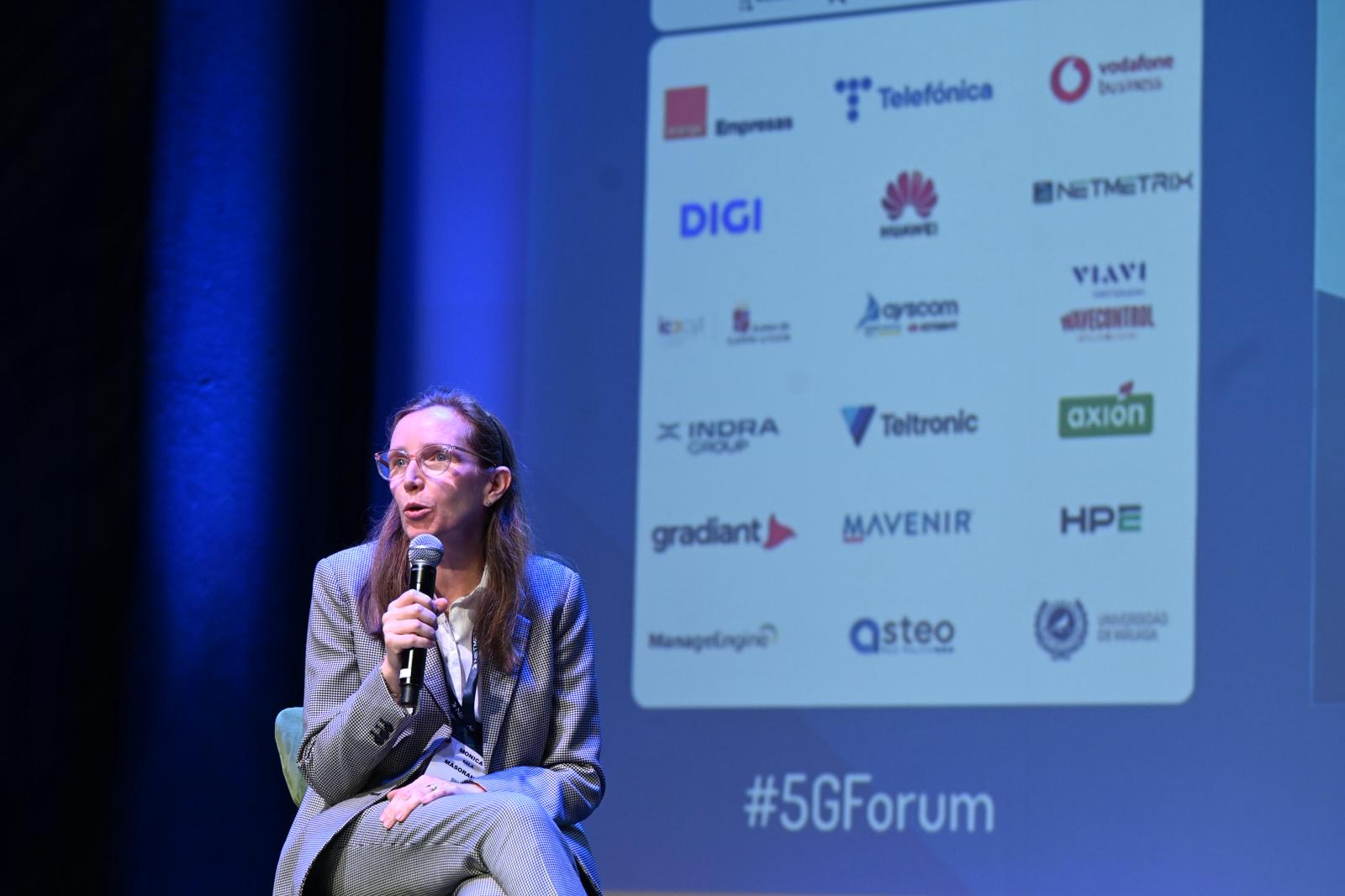
Mónica Sala, Chief Network Officer at MasOrange.
The executive particularly highlighted the potential of network slicing, a technology that will enable networks to be adapted to specific needs and guarantee different levels of service quality. “Network slicing allows a single network to be divided into multiple virtual networks tailored to specific needs,” she noted during her speech.
MasOrange also focused on the evolution towards 5G Advanced, defined as “the step prior to 6G and a very significant evolution”, recalling that “the Isla de la Cartuja in Seville was the first area in Europe to have 5G Advanced”.
Mónica Sala also emphasised the importance of combining terrestrial networks and satellite connectivity to expand coverage and resilience, arguing that “satellite will be the perfect complement to terrestrial coverage”, whilst on the investment front, she noted that the company had allocated “€1.2 billion primarily to the roll-out of 5G and fibre infrastructure, as well as to the development of new technological capabilities”, insisting that “the best is yet to come” in the evolution of future smart networks.
Drones, resilience and smart infrastructure
The prominent participation of the major operators at the 5G Forum was further complemented by various presentations focusing on real-world use cases, network resilience, connected drones and the evolution of the 5G market.
In the case of Telefónica, the company presented its new comprehensive connected drone service, Drone as a Service, a solution that combines 5G, artificial intelligence, remote piloting and advanced operational management to transform sectors such as industry, public administration and logistics.
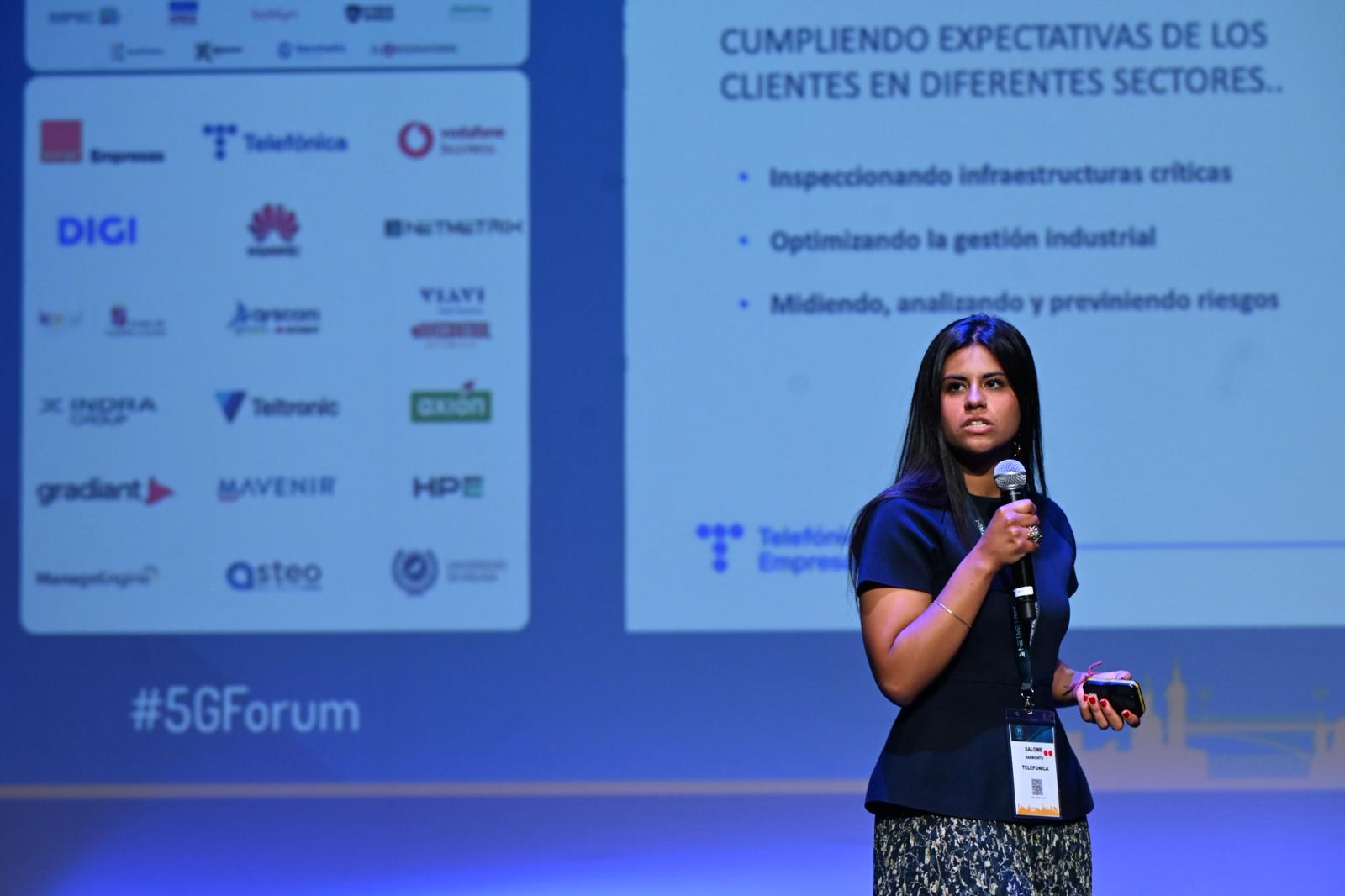
Salomé Sarmiento, Product Manager for Drone as a Service at Telefónica.
During its presentation, the company gave a live demonstration via a connection to Telefónica’s National Operations Centre in Madrid, from where pilots remotely operated a drone deployed in Moguer (Huelva).
Salomé Sarmiento, head of the service, stated that “the real challenge was not the technology, but scaling up the service”, adding that “drones are no longer just cameras in the air, but intelligent platforms capable of detecting and acting in real time thanks to artificial intelligence and 5G”.
The company showcased real-world applications already in use for fire prevention, perimeter security and infrastructure monitoring, asserting that “what seemed like something only NASA could do a few years ago, we are now doing at Telefónica”.
On behalf of Vodafone Spain, the operator focused on the strategic importance of the resilience of telecommunications infrastructure, arguing that “connectivity is today what oil was in the 20th century”.
Nerea Míguez, Director of Business Solutions for Public Administrations, explained how her network was recognised as the most resilient during last year’s blackout thanks to foresight, drills and the reinforcement of critical infrastructure.
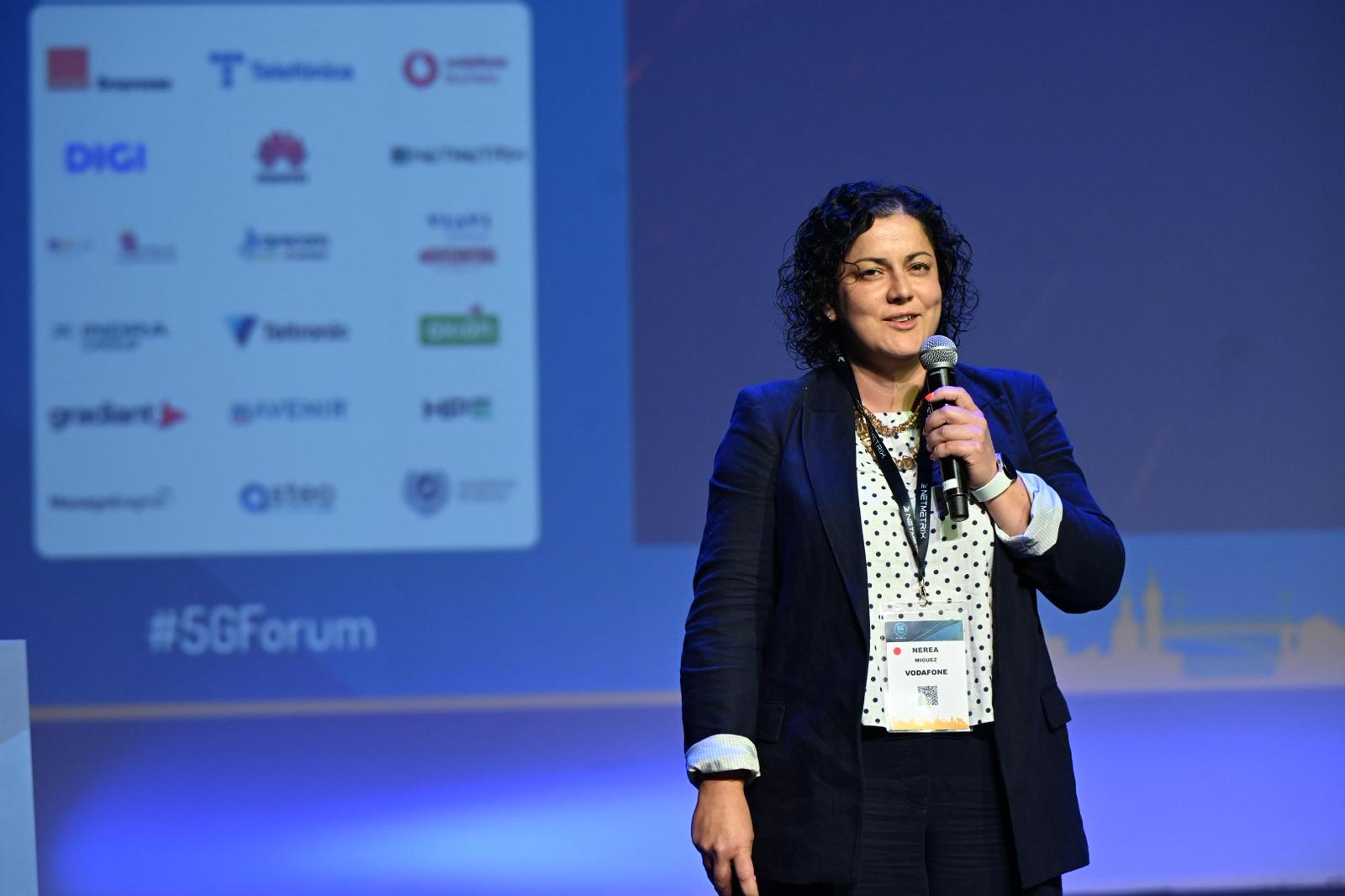
Nerea Míguez, Director of Business Solutions for Public Administrations at Vodafone Spain.
Vodafone Spain also presented developments in private 5G networks, edge computing and Direct-to-Cell satellite connectivity, emphasising that “resilience cannot be improvised; it must be prepared for”.
The company also advocated the need to adopt Zero Trust security models and to conduct crisis scenario training to respond to power cuts, cyberattacks or operational emergencies.
The ecosystem of 5G infrastructure and advanced connectivity also featured prominently with a presentation by Javier Olveira, Director of Pre-Sales Engineering at MasOrange, who analysed market developments in Spain and highlighted that the sector has moved “from pilots and proof-of-concepts to the actual commercialisation of advanced products and services”, focusing on areas such as defence, industry, rail transport and emergencies.
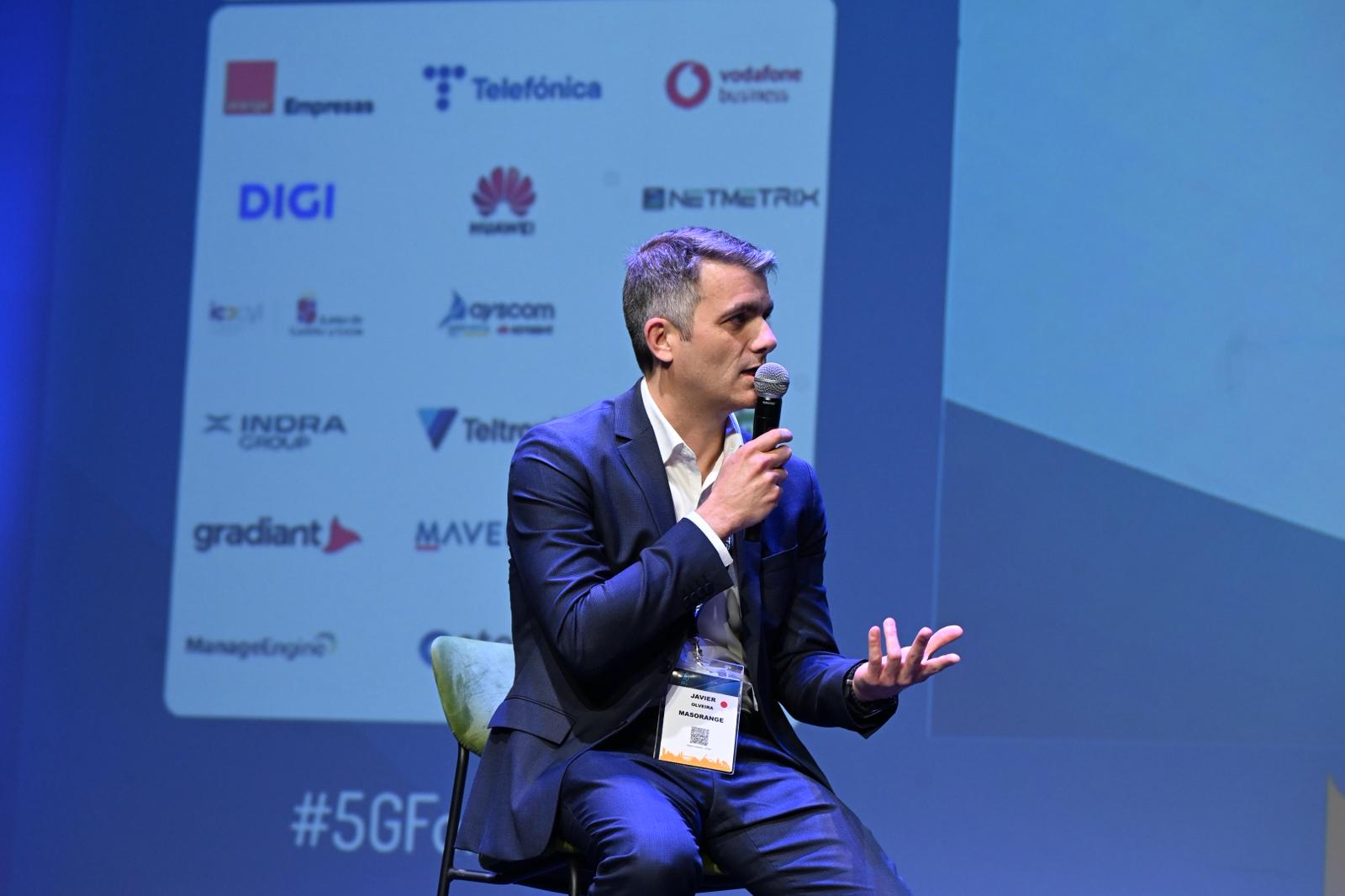
Javier Olveira, Director of Pre-Sales Engineering at MasOrange.
He also defended the importance of “taking 5G to where the business happens”, emphasising the strategic value of indoor deployments, multi-operator infrastructure and scalable networks to drive new solutions based on artificial intelligence and critical services.
The 9th edition of the 5G Forum is taking place from 12 to 15 May at the Cartuja Auditorium —managed by Yventu— in Sevilla TechPark, bringing together operators, technology companies, institutions and national and international experts to analyse the present and future of advanced connectivity.
All the conferences from the 5G Forum will be available to view on demand via The Observatory, the digital platform of Medina Media Events, where each conference will be available 24 hours a day, 365 days a year, free of charge.
The ninth edition of the 5G Forum is organised by Medina Media Events and is supported by Orange Empresas, Telefónica, Vodafone, DIGI, Huawei, Netmetrix, the Regional Government of Castile and León, Ayscom, Wavecontrol/Viavi Solutions, Minsait by Indra Group, Teltronic, Axión, Gradiant, Mavenir, HPE, Manage Engine, Asteo Red Neutra, the University of Málaga, Nokia, Andrew, Italtel, Gsertel, Neutroon, Templus, IplusF, Hispasat, Rohde & Schwarz, Circet, Sapec, Digital Innovation Hub Industry 4.0 / ITCL, Boldyn, Ethon Shield, Anritsu, Evolvers, Grupo Ximenez and Secmotic.