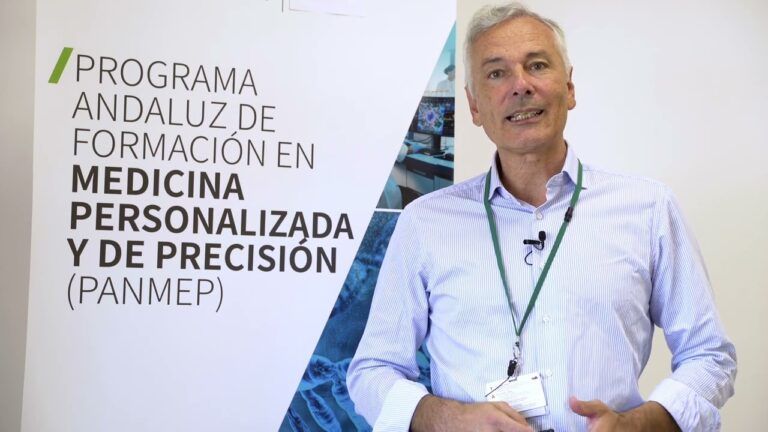
AI and 5G are revolutionising healthcare: “The greatest harm to patients would be not using artificial intelligence”
14/05/2026
- Armando Romanos, Head of Innovation at IAVANTE, part of the Andalusian Regional Government’s Progress and Health Foundation, warns that “the major challenge facing the healthcare system is not technological or economic, but one of leadership” and stresses that “the leap in quality that 5G brings is enormous, as some developments in robotic surgery would simply not be feasible without stable, ultra-low-latency networks such as those currently available”
- The 9th edition of the 5G Forum, taking place from 12 to 15 May in Seville, brings together leading companies, institutions and experts to analyse the present and future of 5G, with a particular focus on network cybersecurity and the protection of critical infrastructure.
The 9th edition of the 5G Forum featured a presentation by Armando Romanos, Head of Innovation at IAVANTE, part of the Andalusian Regional Government’s Progress and Health Foundation. IAVANTE is a leading Andalusian organisation in advanced healthcare training, clinical simulation and innovation applied to healthcare, promoting new models of learning and digital transformation for healthcare professionals. During his presentation, Romanos offered a profoundly transformative perspective on the impact of technology in the healthcare sector.
In a presentation focused on the convergence of technology and healthcare, Romanos argued for the need to evolve towards a new training and care paradigm adapted to the demands of the 21st century. “Technology and engineering are becoming essential elements within healthcare practice,” he noted, referring to the emergence of new hybrid roles combining medicine and engineering, driven by digital transformation.
The IAVANTE representative explained that the healthcare system is undergoing a period of profound reflection on how the professionals of the future should be trained, particularly in light of the emergence of technologies capable of altering both clinical practice and the relationship between patients, professionals and healthcare organisations. “Patients now interact with the healthcare system in a different way and demand more agile and personalised models,” he stated.
“We are moving towards precision training”
One of the central concepts of his speech was that of “precision training”, a model based on personalised learning environments supported by advanced technological tools. According to Romanos, technology allows us to move away from standardised training models to offer specific content to each professional based on their actual needs.
“Today, technology allows us to evolve towards personalised learning environments, where each professional can access, at exactly the right moment, the specific knowledge they need to solve a real problem in their clinical practice,” he emphasised.
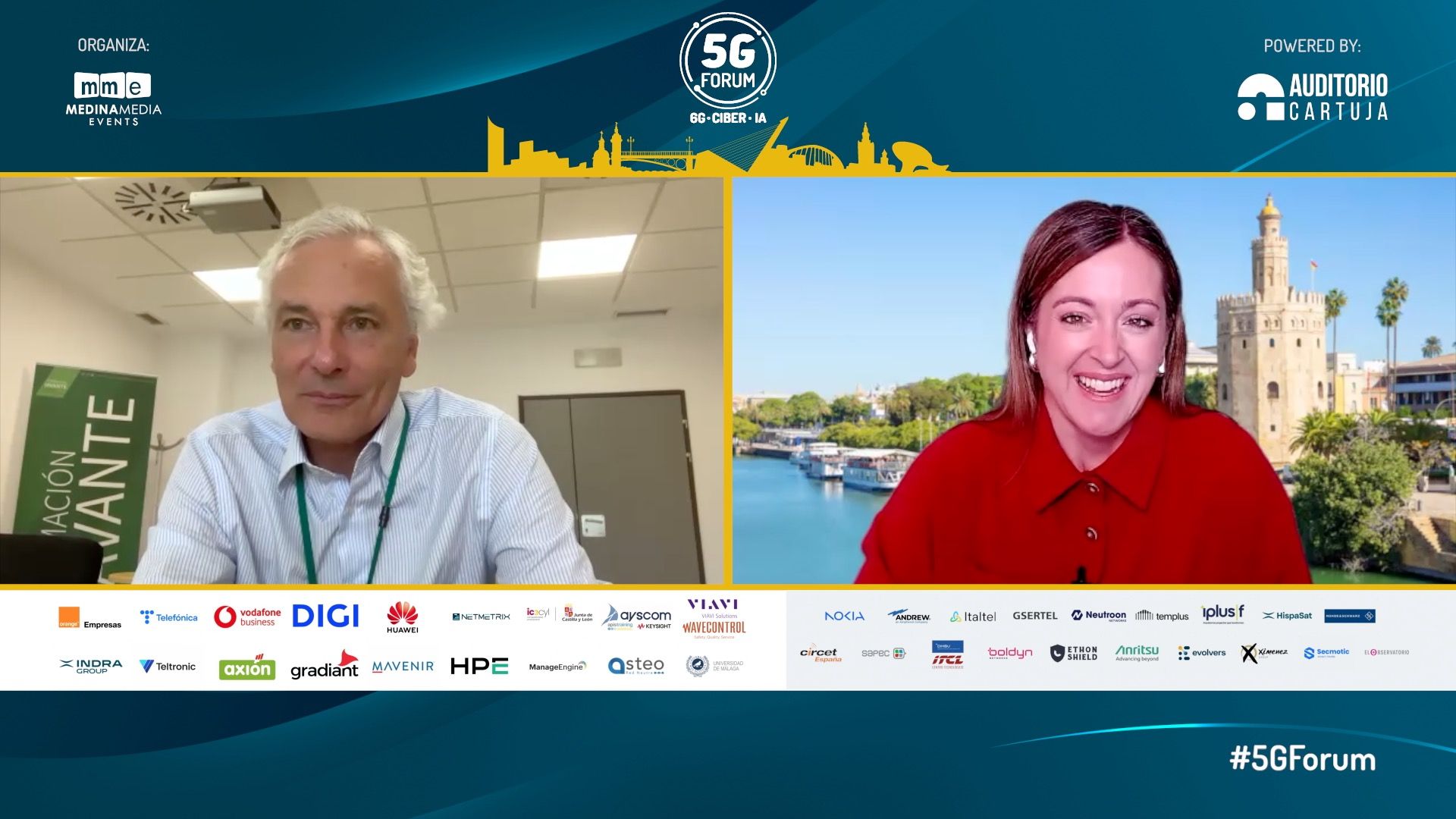
Armando Romanos, Head of Innovation at IAVANTE, during his participation in the 9th edition of the 5G Forum.
In this context, he explained how IAVANTE is working on tech-pedagogy and tech-methodology models, integrating artificial intelligence, clinical simulation and advanced audiovisual resources to create new training experiences. He also argued that the main challenge today is not technological, but organisational: “The great challenge facing the healthcare system is not technological or economic, but one of leadership.”
Romanos also shared recent experiences linked to the use of AI-based tools developed even by medical students to support clinical reasoning and learning processes, highlighting the enormous transformative potential of these technologies.
AI in healthcare: “We cannot allow ourselves to be paralysed by fear”
Artificial intelligence applied to the healthcare sector was another major theme of the presentation. When asked about issues relating to oversight, reliability or safety, Armando Romanos expressed clear optimism regarding the impact of AI on healthcare.
“Artificial intelligence is already an essential tool,” he stated, arguing for the need to implement safeguards and ensure safe use, whilst avoiding a rigid, resistant stance. “What we cannot afford is to be paralysed by fear. The greatest harm to patients and the healthcare system would be not to use it,” he asserted.
In this regard, he emphasised that current results demonstrate that AI, when applied correctly, can deliver extraordinary benefits in terms of improving efficiency, diagnostic accuracy and the quality of care.
5G as a lever for democratising surgery and training
During his speech, he also addressed the role of 5G networks in areas such as telesurgery and specialised medical tele-training. Romanos explained that many projects remained limited for years due to the lack of stability and capacity of previous networks, a barrier that is now beginning to disappear thanks to the roll-out of 5G.
“The latest projects we have developed using 5G technology and in collaboration with Andalusian technology partners have been truly impressive,” he noted. As he explained, the low latency and stability of the new networks allow specialists to supervise surgical procedures or participate in advanced medical training from any location.
“The qualitative leap that 5G brings is enormous. Some developments in robotic surgery would be completely unfeasible without stable, very low-latency networks such as those we have today,” he emphasised.
Armando Romanos’s participation has highlighted the growing prominence of digital health within the technological ecosystem and the role of 5G as an enabler of new healthcare models that are more connected, efficient and accessible.
The 5G Forum 2026, taking place from 12 to 15 May in Seville, brings together leading companies, institutions and experts to analyse the present and future of 5G, with a particular focus on network cybersecurity and the protection of critical infrastructure. Established as Spain’s leading multidisciplinary event on the real-world applications of 5G, it offers a cross-cutting perspective ranging from network deployment to artificial intelligence, the IoT and digital health. With 85 speakers, 37 sponsors and 46 participating organisations, the event combines in-person and virtual formats to demonstrate how this technology is transforming key sectors such as smart cities, connected mobility, emergency services and smart tourism.
All conferences from the 5G Forum will be available to watch on-demand via The Observatory, the digital platform of Medina Media Events, where each conference will be available 24 hours a day, 365 days a year, free of charge.
The ninth edition of the 5G Forum is organised by Medina Media Events and is supported by Orange Empresas, Telefónica, Vodafone, DIGI, Huawei, Netmetrix, the Regional Government of Castile and León, Ayscom, Wavecontrol/Viavi Solutions, Minsait by Indra Group, Teltronic, Axión, Gradiant, Mavenir, HPE, Manage Engine, Asteo Red Neutra, the University of Málaga, Nokia, Andrew, Italtel, Gsertel, Neutroon, Templus, IplusF, Hispasat, Rohde & Schwarz, Circet, Sapec, Digital Innovation Hub Industry 4.0 / ITCL, Boldyn, Ethon Shield, Anritsu, Evolvers, Grupo Ximenez and Secmotic.