“5G and the IoT are no longer just technology; they have become critical business infrastructure”
15/05/2026
- International experts and technology leaders analyse the future of 5G, artificial intelligence, cybersecurity and digital infrastructure during the third day of the 9th edition of the 5G Forum, marked by real-world use cases and progress towards 6G.
The third day of the 9th edition of the 5G Forum has once again turned Seville into a meeting point for the international technology ecosystem, with an agenda focused on some of the major challenges and opportunities that will shape the future of connectivity: artificial intelligence, private 5G networks, cybersecurity, edge computing, smart infrastructure and the evolution towards 6G.
Throughout an intense virtual day, experts from companies, institutions and national and international organisations agreed that 5G is no longer merely a connectivity technology but has become a truly critical infrastructure for the digital economy, driving new production models, smart services and increasingly automated environments.
AI is redefining businesses, networks and infrastructure
One of the main themes of the event was the impact of artificial intelligence on businesses, networks and digital services. Adrián Bertol, Head of Tech & AI Strategy at MasOrange, argued that AI will bring about “a structural change” capable of completely transforming the way organisations work and compete. “AI will be truly productive when we stop talking about AI,” he stated, also highlighting the rise of the concept of the “digital employee” and the strategic role of intelligent automation in business competitiveness.
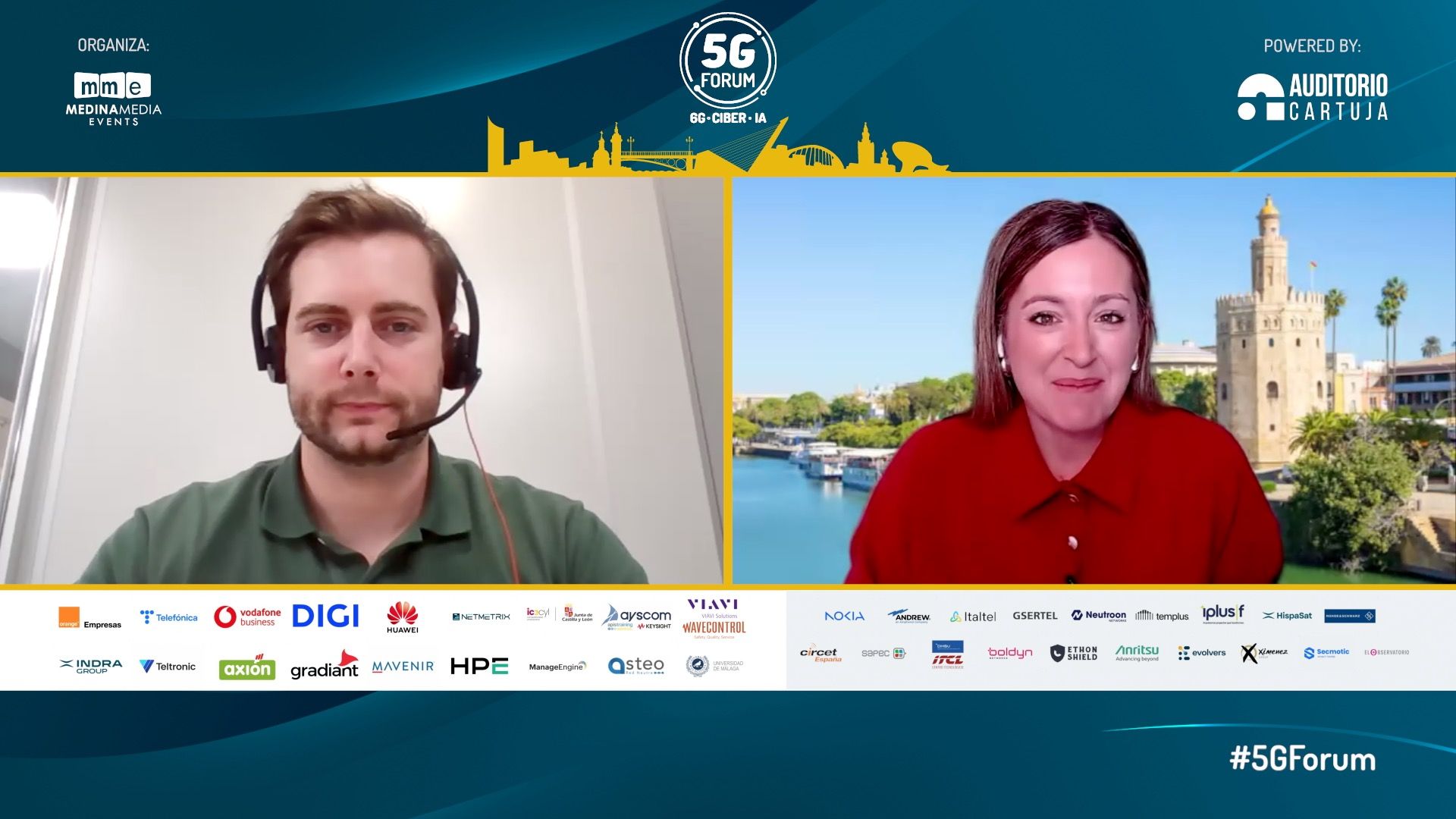
Adrián Bertol, Head of Tech & AI Strategy at MasOrange, during his participation in the 9th edition of the 5G Forum.
The transformation of infrastructure towards distributed and intelligent models was also the focus of several presentations. Adriana Fernández, Head of the Telco Cloud & AI Innovation Squad at OpenNebula Systems, advocated the creation of “sovereign artificial intelligence telco factories” to strengthen European technological autonomy, whilst Mikel Zorrilla, Head of Digital Media & Communications at Vicomtech, focused on future AI-Native Networks—networks capable of autonomously automating and optimising themselves through the integration of AI, Open RAN and edge computing.
In the same vein, representatives from companies such as Neutroon and Italtel agreed on the need to move towards more automated, intelligent and resilient networks. Christopher Gehlen, CEO and Co-founder of Neutroon, emphasised that “the great promise of private 5G is to make operations more efficient”, whilst Manuel García, Director of Engineering at Italtel, highlighted the importance of transferring technological innovation “in an orderly and sustainable manner to real-world environments”.
Cybersecurity and regulation: the major challenges facing the digital ecosystem
During the in-person sessions of the 5G Forum, cybersecurity once again emerged as one of the event’s priority issues. In this third session, the Deputy Director of the National Cryptology Centre (CCN), Javier Candau, warned of the growing sophistication of threats in a “decentralised but hyperconnected” environment, insisting that “digital transformation cannot be understood without cybersecurity”.
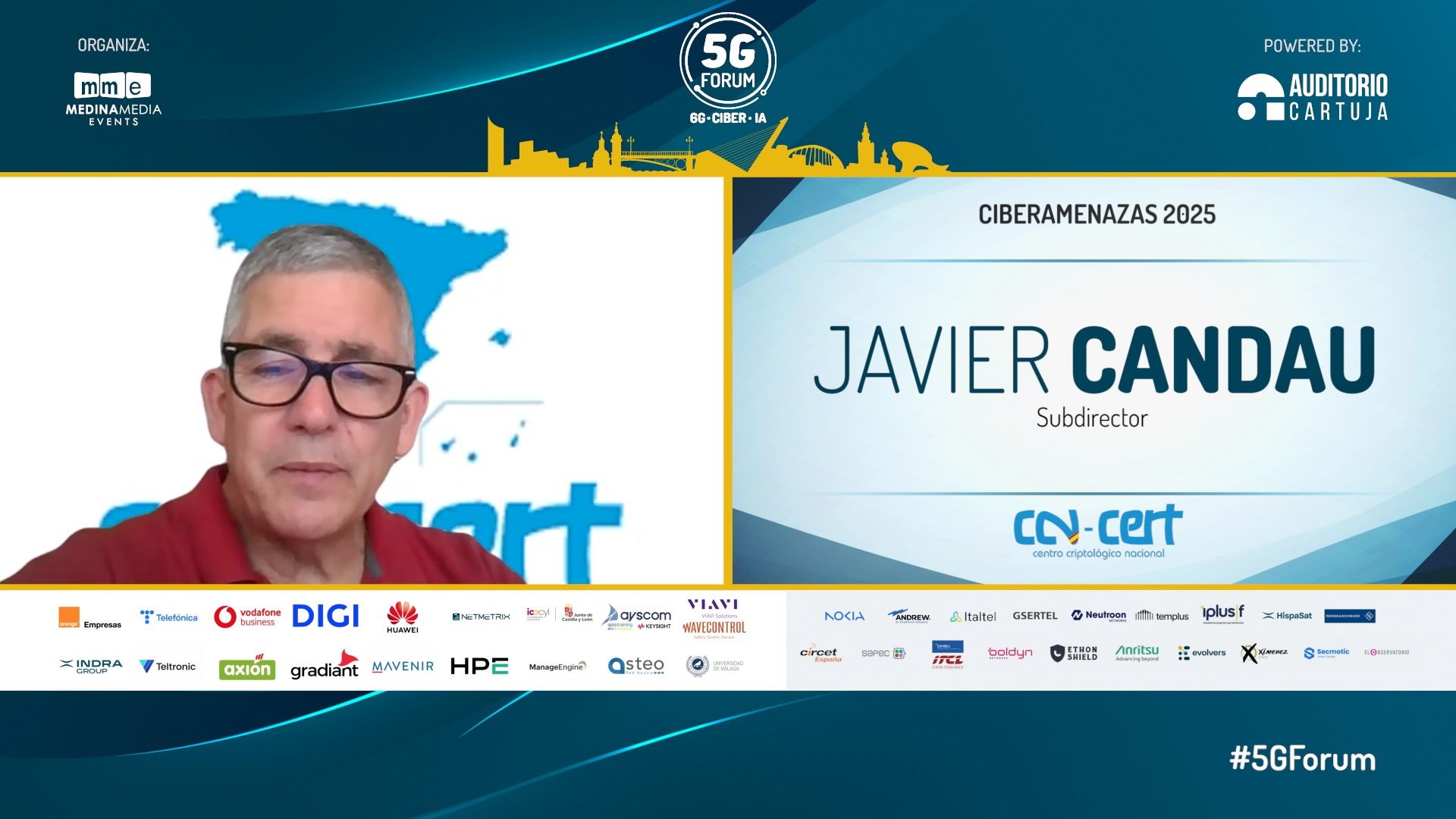
Javier Candau, Deputy Director of the National Cryptology Centre (CCN), during his participation in the 9th edition of the 5G Forum.
In the field of mobile security and new European regulations, Jorge Carrera, Head of Specialist Cybersecurity Sales at DEKRA, addressed the strategic role of mobile device certification and the need to anticipate regulations such as the Cyber Resilience Act.
The threat that quantum computing will pose to current cryptography was another of the day’s key topics. Juan Cambeiro, Applied Quantum Innovation at Telefónica, warned that “much of today’s cryptography could become obsolete within the next decade”, calling for the transition towards quantum-safe infrastructures and post-quantum cryptography technologies to be accelerated.
For his part, the Vice-President of the National Commission for Markets and Competition (CNMC), Ángel García Castillejo, highlighted the importance of regulation in ensuring the balanced development of the digital ecosystem, stating that “regulation must not be an excuse for failing to innovate, but nor can it come too late”.
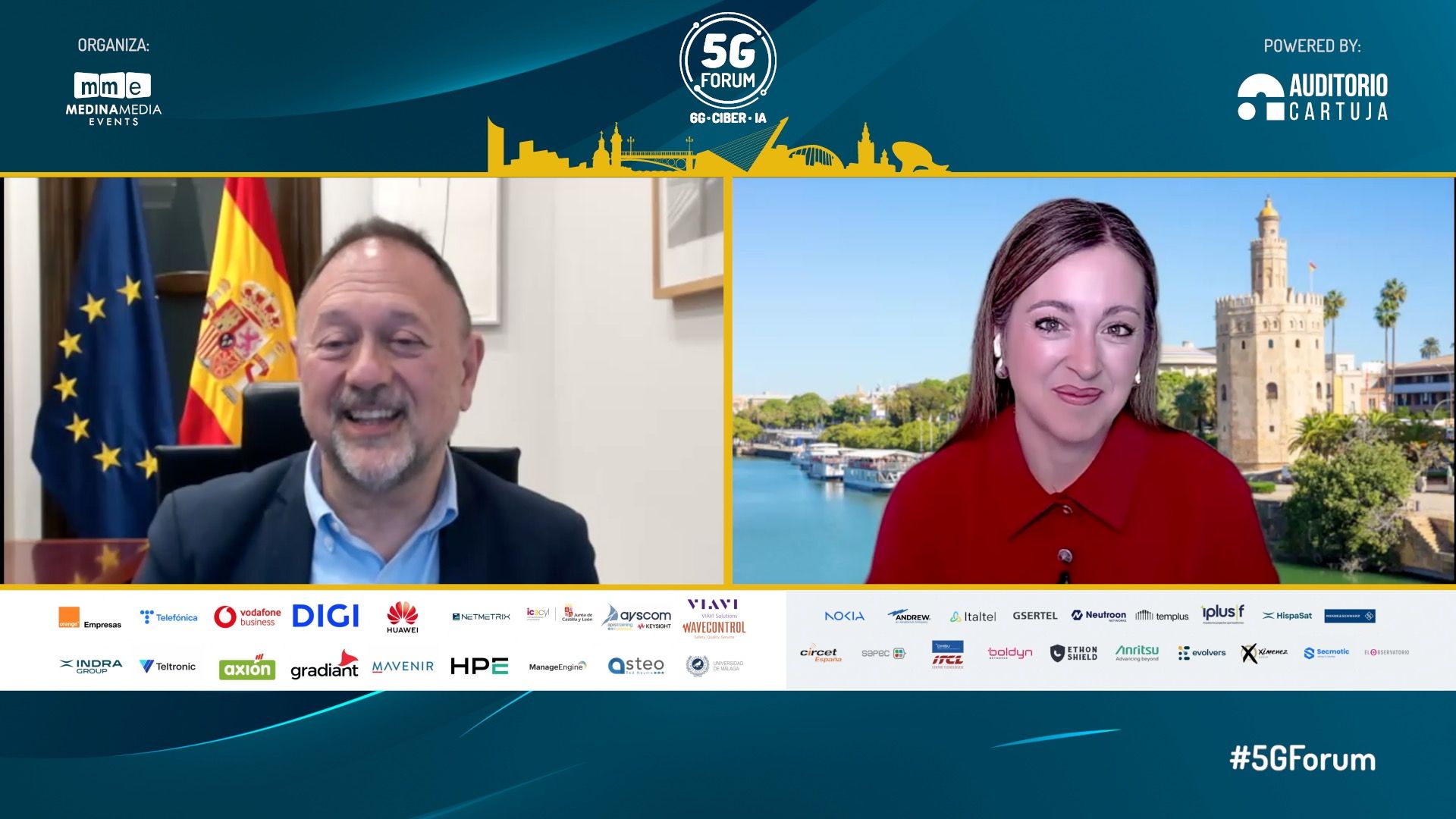
Ángel García Castillejo, Vice-President of the National Commission for Markets and Competition (CNMC), during his participation in the 9th edition of the 5G Forum.
Private 5G, edge computing and real-world applications
Real-world applications of 5G and private networks took centre stage throughout the day. Belén Lanuza, Managing Director of the Digital Innovation Hub Industry 4.0, highlighted the importance of providing companies with real-world testing environments: “The best way to understand a technology is to be able to try it out, and above all to do so without risk.”
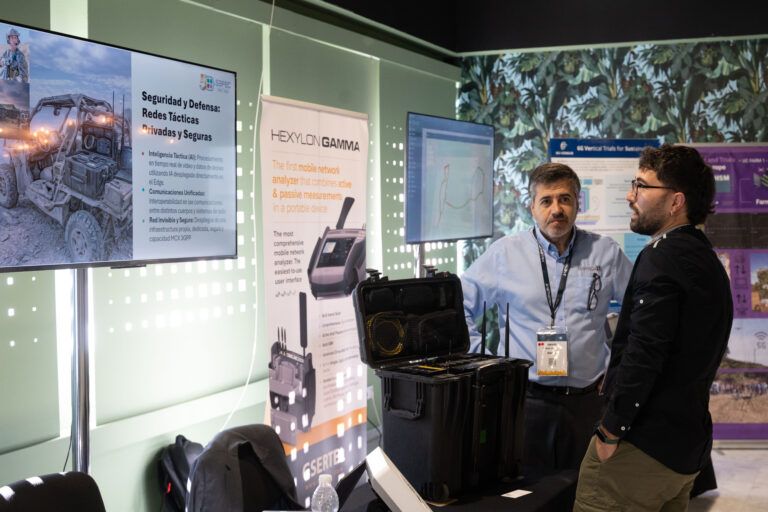
In the field of network validation, Manuel Álvarez, Technical Sales Area Manager at Gsertel, demonstrated how advanced measurement tools ensure the real-world performance of private 5G networks in industrial and automated environments, whilst Odín Fernández, Director of Private 5G Networks and IoT at Vodafone Business, argued that “5G and IoT are no longer just technology but have become critical infrastructure for business”, particularly in sectors such as industry, logistics and emergency services.
The event also addressed how 5G, remote monitoring and artificial intelligence are transforming deployment and maintenance operations in the field. Juan María Fernández, Director of Telecommunications & Smart Solutions at Apave Spain, highlighted the potential of technologies such as drones, camera helmets and smart platforms for conducting real-time remote audits, optimising resources and improving operational efficiency. “We are moving from a reactive, on-site model to smart, connected and predictive monitoring,” he stated, also emphasising the impact of these solutions on sustainability and the prevention of occupational risks.
The impact of 5G on critical sectors such as healthcare was also a key theme during the event. Armando Romanos, Director of the IAVANTE Division, championed the role of artificial intelligence and advanced tele-training in transforming the healthcare system, asserting that “the greatest harm to patients and the healthcare system would be not to use artificial intelligence”. He also highlighted the possibilities offered by 5G to democratise telesurgery and advanced medical training thanks to ultra-low-latency networks.
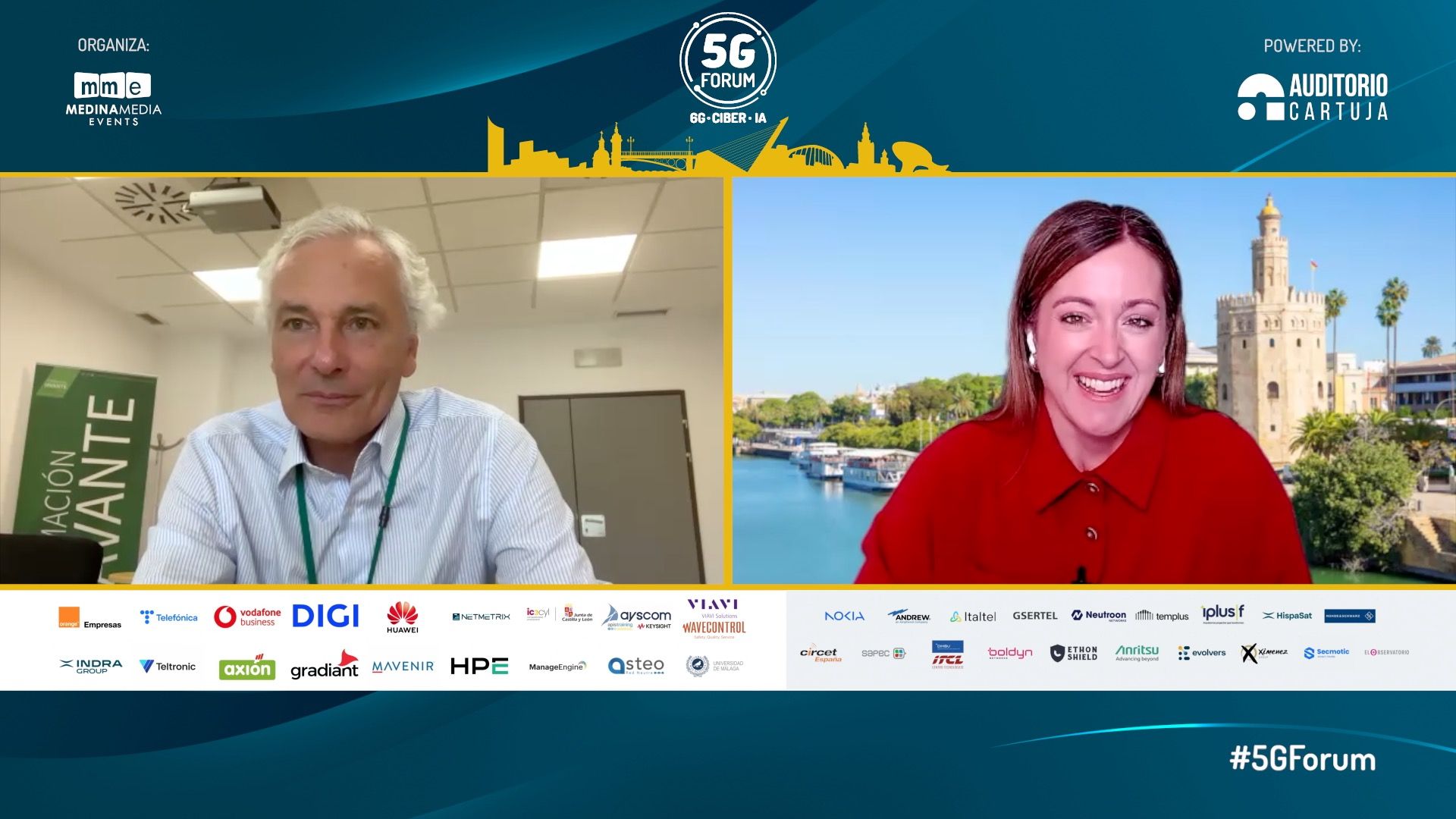
Armando Romanos, Director of the IAVANTE Division, during his participation in the 9th edition of the 5G Forum.
Satellite, global connectivity and the future of 6G
The shift towards hybrid connectivity models also featured prominently during the event. Elena Puigrefagut, Project Manager at the European Broadcasting Union (EBU), presented the progress of the European 5G Emerge project, which combines satellite, 5G networks and IP technologies to build a “more resilient, universal and sustainable” audiovisual distribution system.
The international dimension of the 5G market was analysed by Georgia Jordan, an analyst at S&P Global Market Intelligence, who highlighted Spain’s leadership in fibre and 5G Standalone deployment, noting that the country is “one of the few in the world where all major operators already offer 5G SA”.
Finally, the panel organised by the Regional Government of Extremadura demonstrated how 5G is moving from the pilot phase to real-world use cases in areas such as emergencies, mobility, industry and rural environments. Participants agreed that the technology should serve to strengthen territorial cohesion and generate new opportunities for economic and social development.
The third day of the 5G Forum once again highlighted that the future of connectivity lies in the convergence of 5G, artificial intelligence, edge computing, cybersecurity and automation, in a landscape where networks are evolving into intelligent platforms capable of supporting the next major digital transformation.
All the conferences from the 5G Forum will be available to watch on demand via The Observatory, the digital platform of Medina Media Events, where each conference will be available 24 hours a day, 365 days a year, free of charge.
The ninth edition of the 5G Forum is organised by Medina Media Events and is supported by Orange Empresas, Telefónica, Vodafone, DIGI, Huawei, Netmetrix, the Regional Government of Castile and León, Ayscom, Wavecontrol/Viavi Solutions, Minsait by Indra Group, Teltronic, Axión, Gradiant, Mavenir, HPE, Manage Engine, Asteo Red Neutra, the University of Málaga, Nokia, Andrew, Italtel, Gsertel, Neutroon, Templus, IplusF, Hispasat, Rohde & Schwarz, Circet, Sapec, Digital Innovation Hub Industry 4.0 / ITCL, Boldyn, Ethon Shield, Anritsu, Evolvers, Grupo Ximenez and Secmotic.