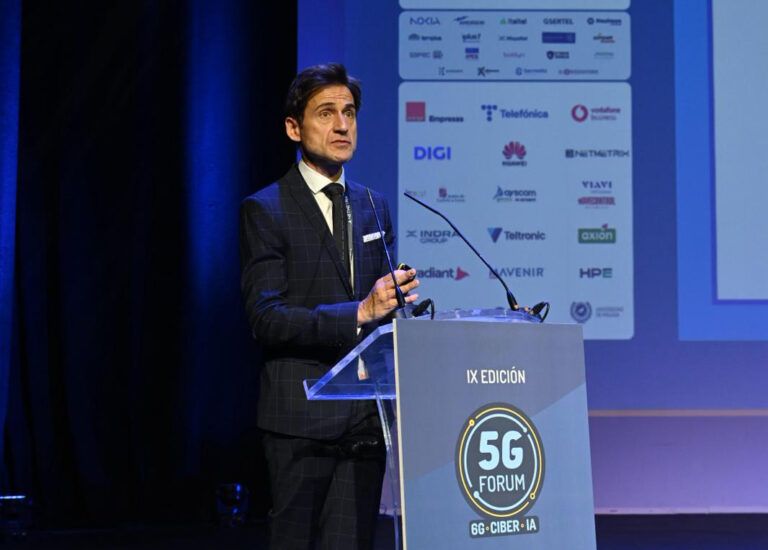
The Public Prosecutor’s Office warns at the 5G Forum of the “absolutely exponential” growth in cybercrime
13/05/2026
- Gabriel González, Deputy Prosecutor for Cybercrime at the Public Prosecutor’s Office, warned of the exponential growth of cybercrime in parallel with advances in connectivity, 5G and digitalisation.
- “Computer fraud is the third most common offence in terms of the number of cases in Spain, behind only assault and domestic violence.”
- Institutions, operators and technology companies gathered in Seville to analyse the new security challenges in an environment characterised by hyperconnectivity, artificial intelligence and critical infrastructure.
The 9th edition of the 5G Forum dedicated one of its most significant sessions to analysing cybersecurity as it applies to the 5G ecosystem, an area now considered strategic in light of the growth of digital threats, the expansion of connected infrastructure and the shift towards increasingly distributed, virtualised and intelligent networks.
The session brought together experts from institutions, public administrations and leading companies in the technology and telecommunications sectors at the Cartuja Auditorium — managed by Yventu — in Sevilla TechPark. They agreed that security has become a critical element in ensuring the resilience of digital services and the protection of essential infrastructure.
One of the key speakers at this event was Gabriel González, Deputy Prosecutor for Cybercrime at the Public Prosecutor’s Office, who warned of the exponential growth of cybercrime in parallel with advances in connectivity, 5G and digitalisation. During his speech, he warned that “the growth of cybercrime over the last ten years has been absolutely exponential, increasing more than fivefold”, emphasising that the rise in connected devices and digital services is also expanding the attack surface and the potential number of victims. The prosecutor also highlighted that “computer fraud is the third most common offence in terms of the number of cases in Spain, behind only assault and gender-based or domestic violence”, in a context where digital crime is operating in an increasingly industrialised and automated manner.
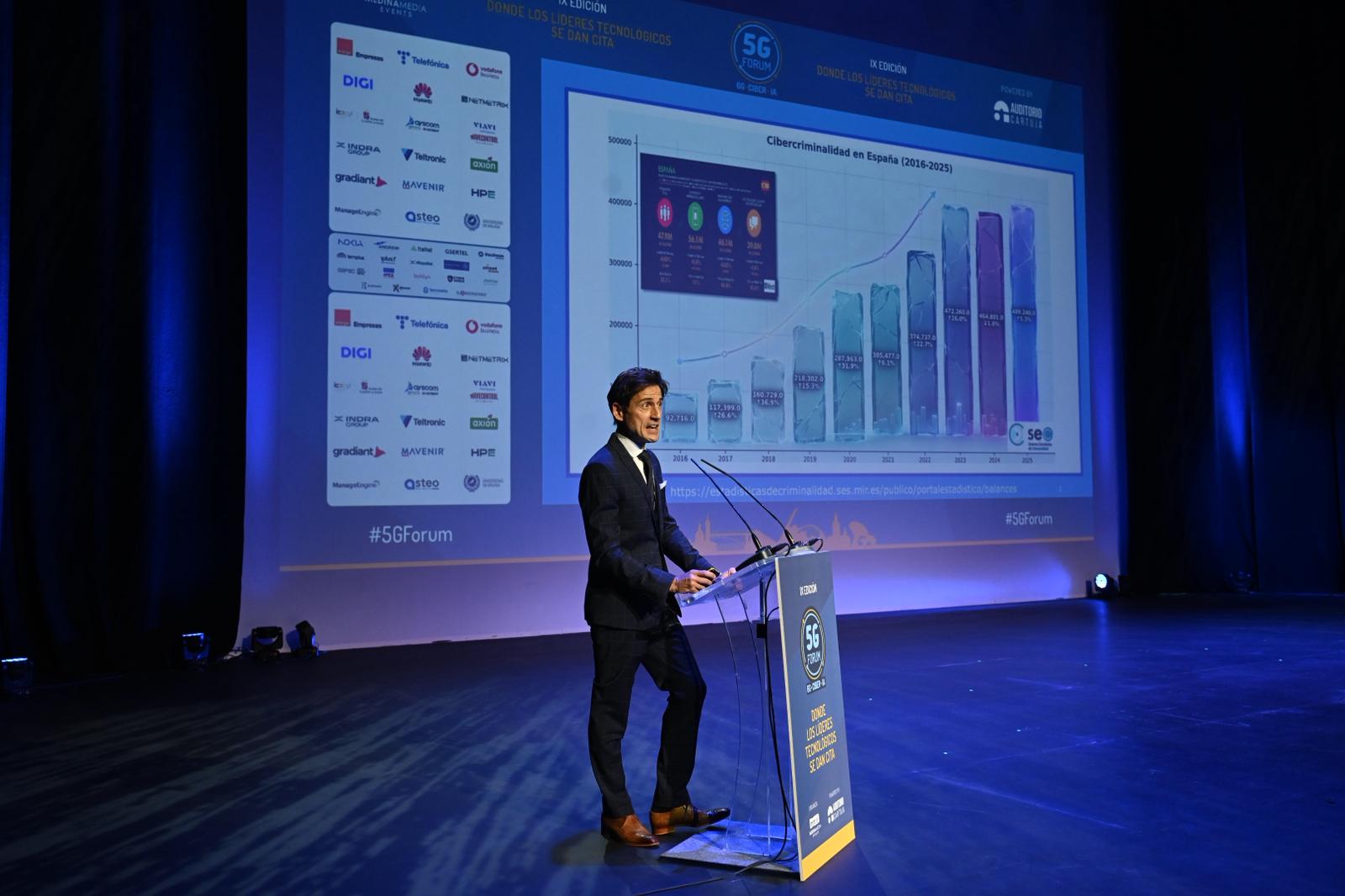
Gabriel González, Deputy Prosecutor for Cybercrime at the Public Prosecutor’s Office, during his participation in the 9th edition of the 5G Forum.
Gabriel González also highlighted the professionalisation of cybercrime and the current ease of access to criminal tools. “Today, ‘crime as a service’ exists: anyone can hire tools or services to commit crimes,” he noted, explaining how this model has greatly lowered the barrier to entry for committing fraud, mass phishing campaigns or digital attacks. The prosecutor also highlighted the difficulty of investigating such crimes due to the use of VPNs, anonymisation systems and international operations, calling for greater collaboration between government bodies, operators and technology platforms. In this regard, he argued that “reducing anonymity on social media would greatly facilitate the prevention and prosecution of these crimes”.
During his speech, the representative of the Public Prosecutor’s Office also warned of the growing impact of digital violence and crimes committed via social media and messaging platforms. “Social media and messaging platforms have greatly facilitated crimes such as harassment, threats or virtual sexual assaults,” he stated, highlighting in particular the seriousness of crimes against minors and the lasting psychological impact caused by such practices.
González also addressed the emerging role of artificial intelligence in both the evolution of crime and in judicial investigations themselves. “Artificial intelligence is having a dual impact: it facilitates new forms of crime, but it is also beginning to be used in investigations and in the judicial sphere,” he explained, arguing for the need to always maintain human oversight and legal judgement in any automated process.
Digital identity, resilience and network protection
The event also featured a presentation by Antonio Sánchez-Maroto, Cybersecurity Business Development Manager at MasOrange, who highlighted one of the major challenges facing the connected industry: cybersecurity in 5G industrial environments. Sánchez-Maroto warned that “5G has led to an exponential explosion of non-human identities”, ranging from sensors and robots to APIs and automated systems, making identity management the new security perimeter. He also stressed that “without visibility, there is no security”, highlighting the need to continuously monitor IT and OT networks, segment critical infrastructure and strengthen privileged access. The representative from Orange Empresas also warned of the increased risks associated with legacy systems, insecure APIs and industrial remote access, concluding with a stark message: “In 5G industrial environments, passwords are no longer a secret: they are a vulnerability”.
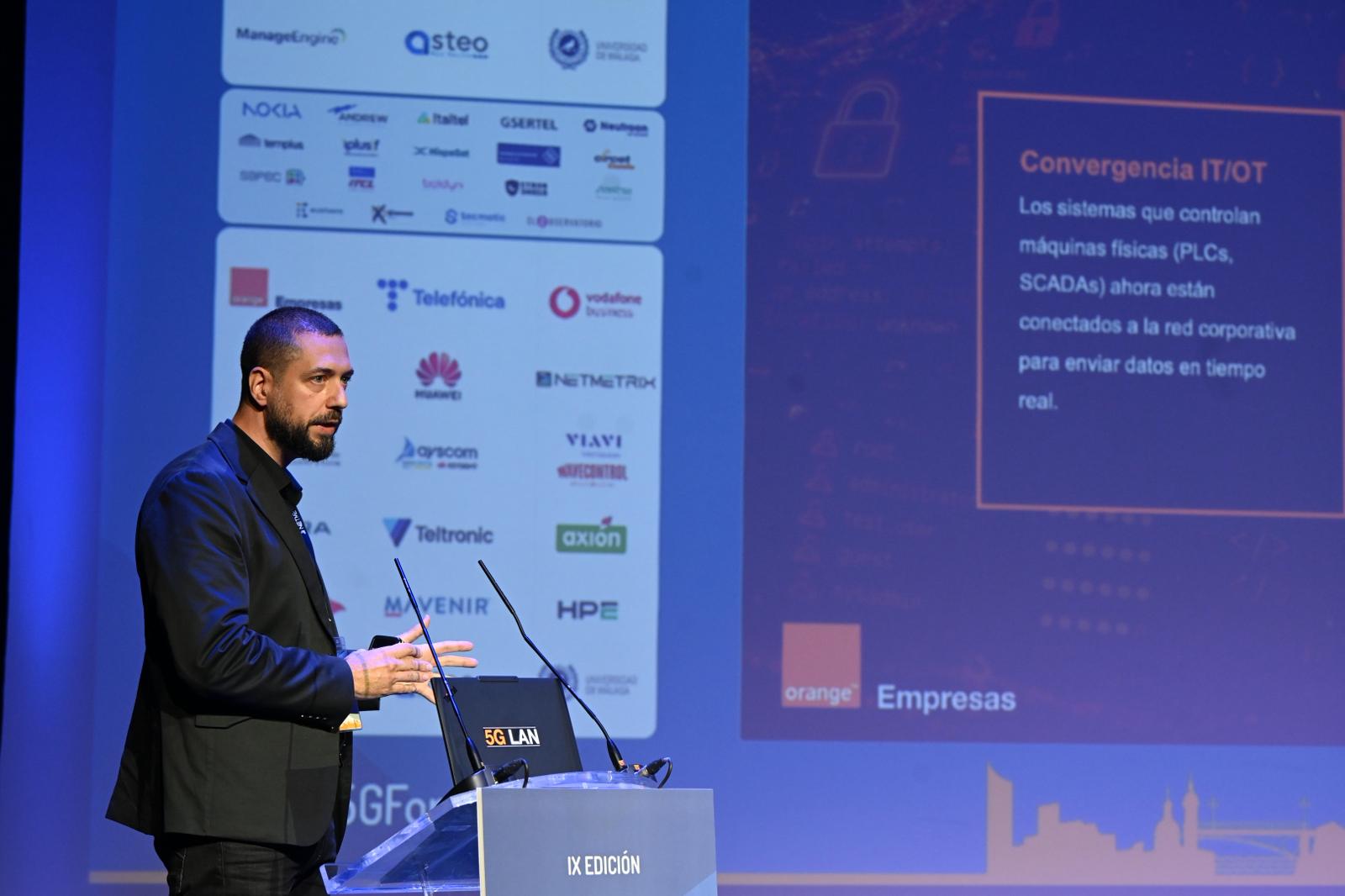
Antonio Sánchez-Maroto, Cybersecurity Business Development Manager at MasOrange, during his participation in the 9th edition of the 5G Forum.
For his part, Roberto Lara, Director of the Cybersecurity Business Unit at Vodafone Business, addressed the new cybersecurity challenges in 5G networks, highlighting how the shift towards software-defined infrastructures multiplies the attack surface against potential attacks. The executive emphasised that “the traditional perimeter is disappearing” and argued for the need to adopt “Zero Trust” models in hyper-connected environments. During his presentation, the focus was on critical sectors such as industry, robotics and healthcare, where a cyberattack can have real physical consequences. He also highlighted the role of network slicing, continuous monitoring and advanced segmentation as key elements in protecting new 5G infrastructures. “We are moving from protecting hardware to protecting ecosystems that are entirely software-defined,” noted the head of Vodafone Spain, insisting that security must be integrated from the initial design of any 5G network.
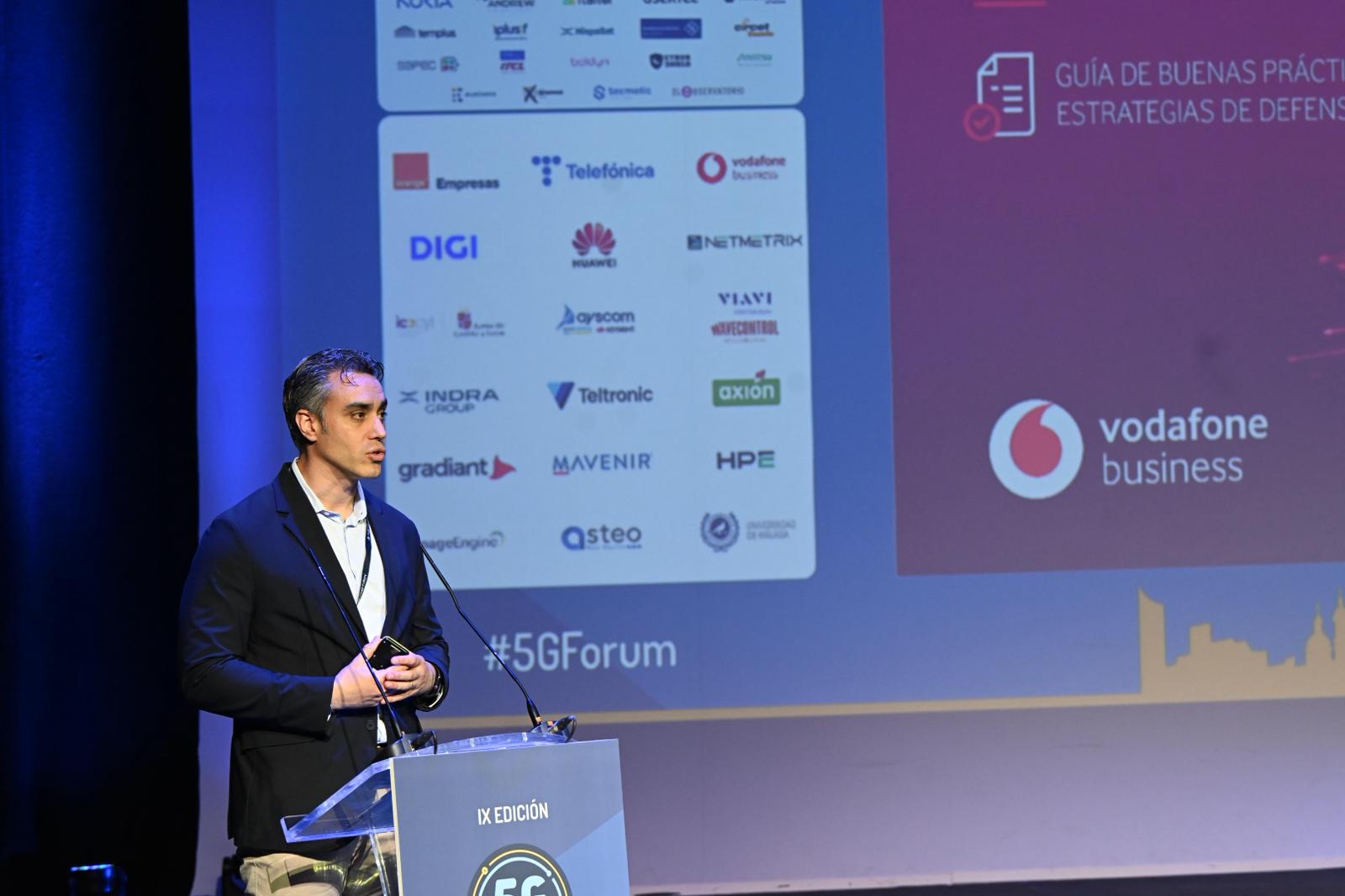
Roberto Lara, Head of the Cybersecurity Business Unit at Vodafone Business, during his participation in the 9th edition of the 5G Forum.
The 9th edition of the 5G Forum is taking place from 12 to 15 May at the Cartuja Auditorium —managed by Yventu— in Sevilla TechPark, bringing together operators, technology companies, institutions and national and international experts to analyse the present and future of advanced connectivity.
All the conferences from the 5G Forum will be available to view on demand via The Observatory, the digital platform of Medina Media Events, where each conference will be available 24 hours a day, 365 days a year, free of charge.
The ninth edition of the 5G Forum is organised by Medina Media Events and is supported by Orange Empresas, Telefónica, Vodafone, DIGI, Huawei, Netmetrix, the Regional Government of Castile and León, Ayscom, Wavecontrol/Viavi Solutions, Minsait by Indra Group, Teltronic, Axión, Gradiant, Mavenir, HPE, Manage Engine, Asteo Red Neutra, the University of Málaga, Nokia, Andrew, Italtel, Gsertel, Neutroon, Templus, IplusF, Hispasat, Rohde & Schwarz, Circet, Sapec, Digital Innovation Hub Industry 4.0 / ITCL, Boldyn, Ethon Shield, Anritsu, Evolvers, Grupo Ximenez and Secmotic.